Georgia Nursing Newsletter
Table of Contents
From the Association GNA President's Message - Happy 2025 Georgia Nurses CEO Corner - We have your back under the Gold Dome Georgia Nurses Association Social Justice and Racial Equity Workgroup: A Historical Overview
Continuing Nursing Professional Development A Look at the Past to View Us Now. Where We Began: Where We Are.
The Georgia Nurses Foundation GNF 2024 Annual Review
Nursing Practice Why patients sue - and how effective communication can help avoid a lawsuit DNP Case Study: Alleged delay in diagnosis of a deep vein thrombosis (DVT) resulted in the patient's death
Academia Nursing students' exam analysis using an exam review learning activity
Subject Matters Exploring the Power of Inclusion and Belonging as a Human-Centered Leader in Healthcare™ PFAS Toolkit: Comprehensive Clinical Guidance for Addressing PFAS Exposure in Patients
Advocacy Tort Reform can improve healthcare, and life for medical professionals.
From Our Colleagues Nurses Honoring Nurses: Georgia Nurse Honor Guard
Lifestyle Begin the New Year with Financial Strategies for Nurses
Important Dates GNA now receiving nominations for its 2025 - 2027 Board of Directors Elections Slate Georgia Nurses Association Legislative Institute (GNALI)
Join ANA & GNA Today Join GNA Today
January 2025

Established in 1907, the Georgia Nurses Association is the largest professional association for registered nurses in the State of Georgia.

Our Mission: Equitable care for all Georgians through the unified power of Nurses.

Our Vision: Inspire and empower Georgia's Nurses to lead innovative change and improve health.

Our Values: GNA L.E.A.D.S. through: Leadership / Excellence / Advocacy / Diversity / Service

From the Association
GNA President's Message - Happy 2025 Georgia Nurses
Erica Mills, PhD, RN, NPD-BC - President of the Georgia Nurses Association

It is my hope that you enjoyed the holidays and have used some time to rest and renew your passion for our beloved profession. Everyone in an even year rotation went through the usual licensure renewal process and has gained more time to practice and affect the lives of those entrusted to you.

Georgia Nurses Association (GNA) has continued to grow and sustain meaningful programs with the members in mind. If you have an idea or concern, please let us know. It is the GNA Board of Directors' (the Board) intention to serve the needs of the membership with every event and offering. Please familiarize yourself with the website and listing of events. There you will get information and you will be able to rightfully claim your seat at the table. All members are encouraged to find your niche and join in the meaningful work that is being done to improve our practice environment.

I had the opportunity to sit and reflect on the many exciting experiences and opportunities that I've had in my first year as president. Each one was different but equally impactful. From visiting schools of nursing to attending conventions and conferences, I am better for it all. I had the immense honor to represent Georgia at the Nurse Services Organization (NSO) Leadership Summit in Denver, Colorado.  Many nurses and nursing students are familiar with the event because the NSO is the malpractice insurance that many healthcare providers hold. Having an insurance policy gives you reassurance that you will be represented with expertise and knowledge should the unlikely event of a litigious situation occur.

At the summit, the advisory board and the staff reviewed trends, lessons learned, and discussed legal issues in nursing. Accurate and timely documentation remains the best defense. The advent of AI and its integration into nursing practice will change practice as we know it. The recommendation for this change is to always know and follow your institutions' policies and procedures and to treat the patient. Not the machine. Nurses are encouraged to visit NSO's web page for more details on safeguarding your license and tips on steps to take if you're named in a lawsuit.

Did you know, if you have a license, you are not protected under the Good Samaritan Act? Protect yourself. You could choose to assist in an emergency while in flight. This can render you vulnerable to litigation.

The 2025 legislative session will be soon underway. We encourage you to get to know your local elected officials. This is truly where relationships, influence and being a trusted advisor come together for a purpose. The Board looks forward to meeting each of you at the Georgia Nurses Day at the Capitol. No experience is required. We welcome you to register and attend as we educate lawmakers on our priorities. The priorities are driven by current trends and needs and mostly by the legislative survey from the membership.

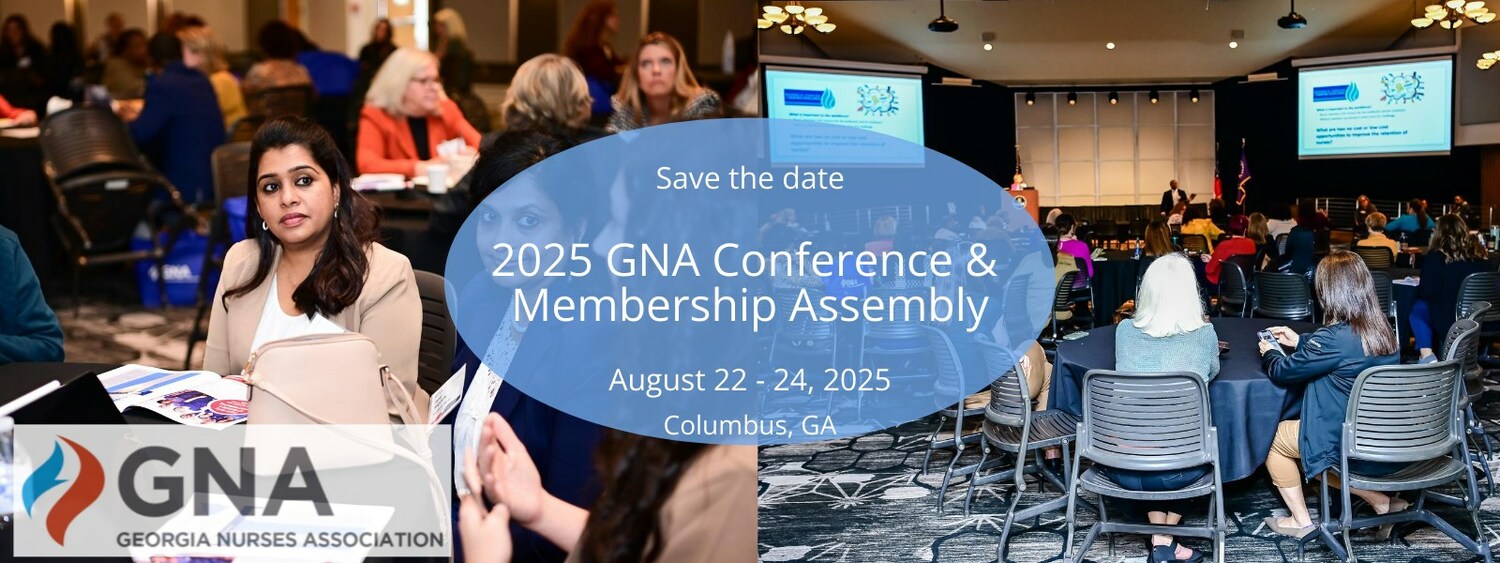
Another call to action is for all members who are interested in taking a more active approach in leadership. The call for nominations will go out in the Spring. If you or someone you know is interested, apply without delay. The nominations will remain open for a determined amount of time. Next, the membership will vote. Members of the Board of Directors are elected by a majority vote. All results will be shared in Columbus at our membership assembly in August. Please plan to be in attendance. This is some of the most rewarding work you can do to better the outcomes of the state and the profession.

As always, I extend a heartfelt thank you to the GNA Board of Directors and our colleagues in the GNF Board of Trustees. We are grateful for the leaders of the chapters and for each member's support. As you recall in high school, the legislative branch is very important. Local laws impact us directly. We should lend our voice to discussions being had about nursing. Let us unite in our communities and across the state to be our own advocates.

It is my esteem honor to continue to represent Georgia amongst other leaders around this great nation as well as across the state. Remember to take good care of yourself. Make time for yourself and bring fun back!

In service,

Erica Mills, PhD, RN, NPD-BC

President@georgianurses.org 

CEO Corner - We have your back under the Gold Dome
Matt Caseman, CEO Georgia Nurses Association, Georgia Nurses Foundation

January 13th, the start of the 2025 General Assembly, is fast approaching, and the Georgia Nurses Association is always there for you under the Gold Dome. That is our job.

Never forget; if you are not at the table, you are on the menu.

What have we done for you:

GNA killed legislation allowing Veterinary Technicians to hijack the title of nurse and call themselves Veterinary Nurses. Nurses treat people, not animals, and you worked hard to become a nurse. Only you deserve to call yourself one.

GNA protected your privacy by passing a bill requiring the Secretary of State to remove your home addresses that were publicly accessible on his website. Your information should be confidential.

GNA passed the Nurse Licensure Compact providing you the freedom to practice in other compact states.

GNA passed legislation increasing punishment for aggravated assault and aggravated battery committed upon emergency healthcare workers to ALL healthcare workers in a hospital or healthcare facility. The bill also empowers hospitals to employ law enforcement officers with the power to make arrests and file reports.

GNA passed legislation requiring hospitals to have a policy in place for the evacuation of harmful surgical smoke from the operating room.

GNA helped pass the creation of the Georgia Healthcare Workforce Commission and provided valuable testimony on our legislative priorities at one of its meetings.

GNA helped pass legislation creating a separate license for APRNs.

GNA helped expand the Preceptor Tax Incentive Program to provide a tax credit to APRNs who serve as a preceptor.

GNA helped pass legislation authorizing ARPNs and PAs to prescribe schedule II's under certain conditions and order handicap placards.

GNA helped pass legislation authorizing the Georgia Board of Health Care Workforce, to provide for student loan repayment for certain nursing faculty and sets criteria for qualifications and applications.

GNA helped secure $250,000 to establish a nursing faculty loan repayment program and $129,196 for two nursing analysts and one full-time educator for the Georgia Board of Nursing.

GNA secured $150,000 for the GNA Peer Assistance Program which helps nurses suffering from substance use disorder get clean, sober, and back practicing in the workforce.

Our priorities for the 2025 session include legislation giving nurses a voice in their hospitals staffing decisions, creating an alternative to discipline program expanding our Peer Assistance Program, and further expanding scope of practice allowing APRNs to practice to the full extent of their education and training, which improves access to quality healthcare for all Georgians.

You worked hard to be a part of the number one most trusted profession. Don't take being a nurse for granted. GNA is your champion and protector at the state capitol. If you are not a member, click here to join GNA.

Georgia Nurses Association Social Justice and Racial Equity Workgroup: A Historical Overview
Karen Rawls, Phd, MSN/Ed, RN

In the spring of 2020 during the height of the first National pandemic the United States had seen in over 100 years, the Georgia Nurses Association gave birth to a bold idea; the Social Justice and Racial Equity Workgroup. This workgroup was launched with nurses from various backgrounds, degrees, cultures, and experiences with the collective desire to explore thoughts on making the nursing profession more committed to diversity, equity, and inclusion systems by addressing social injustices and racial inequities. As a pioneer in this space, the Georgia Nurses Association began by convening nurses with the goal of flushing out root causes, investigating current behaviors, assessing thought processes, and raising awareness of current, past, and future injustices and racial concerns affecting the nursing profession,
The workgroup initially met weekly with the goal of learning about how each member had encountered racism and racial injustice in the nursing profession. The focus was to facilitate very difficult conversations intended for expressing concerns regarding social injustice and racial inequities in the nursing profession. As with most “think tank” operations, there were many contributions infused with much passion, emotion, as well as reflection. Nurses are very sure to use learned concepts when tackling such an enormous undertaking. A collaborative coalition of concepts was established in the form of a purpose statement, work plan, and framework complete with action items, short-term and long-term goals. The purpose statement: “To Achieve Racial Equity and Social Justice in Nursing.”
The Social Justice and Racial Equity Workgroup offered a survey to Georgia Nurses in an effort to assess the validity of the idea that there was concern about this issue and if nurses had an interest in exploring cause, effect, and solutions. The survey was an informal effort to determine relationships between workplace social injustices and racial inequities. Next, the workgroup determined that a need was evident, and necessary meaningful awareness was established. The Georgia Nurses Association implemented a Social Justice and Racial Equity link on the website which houses the action care plan information, upcoming calendar events, and a comprehensive resource toolbox.
Interactive education was the decision for engaging nurses in the work. Original educational offerings with contact hours were provided through the Georgia Nurses Association professional development team. “Nursing Conversations in Black and White©” was the first presentation offered on Zoom platform, due to COVID-19. The offering is a panel discussion with interactive participation designed to provide a background on racial inequities in nursing with a focus on opening dialog on the often unspoken conversation amongst nurses related to race and race relations. “How to Deal with a Racist Patient©” based on a true, personal case study, provided participants with an in-person passionate experience immersion bringing forth realistic nursing work-life. Thought-provoking discussions on systemic racism, bias, and staff mismanagement relate to furthering untoward conditions that stoke injustice and racism in nursing. These presentations have been requested by nursing organizations, colleges, and universities throughout Georgia.
Meanwhile, the Social Justice and Racial Equity Workgroup developed a presentation for purposes of continuous distribution throughout the nursing community for purposes of providing easy access and usage. This presentation, “Social Justice and Racial Equity in Nursing©” has been experienced in many nursing programs across Georgia and other states. This presentation is a comprehensive overview of nursing evolution knowledge gaps as it relates to diverse contributions by nurses of color.
Recently, the Social Justice and Racial Equity Workgroup was selected as one of the organizations to host the award-winning documentary, by Shift Films, “Everybody’s Work: Healing What Hurts Us All©.” On July 1, 2024, the Social Justice and Racial Equity Workgroup was awarded the American Nurses Association C-SNA grant to further efforts in advancing work in diversity, equity, inclusion, belonging, social justice, and racial equity in nursing. Future goals in accordance with the Social Justice and Racial Equity Action Plan Proposal affords the workgroup to provide continued educational opportunities, engagements, and passionate discussions on pathways in mitigating social injustice and racial inequities in nursing.


Karen Rawls, PhD, MSN/Ed, RN

Georgia Nurses Association Racial Equity and Social Justice Workgroup Chair Atlanta Black Nurses Association Vice President Georgia Nurses Foundation President-elect Georgia Nursing Leadership Coalition Member Chi Eta Phi Gamma Chi member

Article references 

Georgia Nurses Association | Nursing Network
https://www.nursingworld.org/


Everybody’s Work: Healing What Hurts Us All -- Film by SHIFT Nursing

Continuing Nursing Professional Development
A Look at the Past to View Us Now. Where We Began: Where We Are.
Lynn Rhyne, MN, RN - Program Director of GNA's Nursing Continuing Professional Development Unit

I have been in a contemplating mood lately, so I decided to examine the progress Nursing Continuing Professional Development Unit has grown in GNA.

I have been a member of the Continuing Education Unit since 2003. I started my journey as a Nurse Peer Reviewer (NPR) under Dr. Debbie Hatmaker and Marcia Noble. Wow, what a dynamic duo those two were! Just a note to congratulate Dr. Debbie on her retirement from ANA at the end of December 2024.

At that time, all applications were delivered by "snail mail". Talk about tedious, time-consuming, and not financially sound.

I participated in developing our 2013 Self-Study. 2013 criteria changed a few criteria, so the application was easy to "copy and paste much of the information from the previous criteria with some tweaking."

For whatever reason, when the 2015 criteria were changed dramatically, GNA decided to let the accreditation expire. At that time, we received at least 50 - 150 applications for Individual Activities annually and we had 40 Approved Providers.

In 2014 GNA hired a new CEO. He and the Board decided GNA would become Accredited Approvers (again). This was a great time to start the process. The new CEO hired Kathy Hammond as the Nurse Peer Review Leader. Doctors Georgia Barkers, Dina Hewett, and Wanda Jones and I joined Kathy as NPRs. We assisted with writing the required Self-Study for reaccreditation.

2015 criteria mandated all new criteria for Accredited Approvers of Continuing Education. Kathy was great! She was organized and had attended the ANCC Workshop for New Approvers. This gave her the opportunity to understand and interpret those criteria.

2017 came and Kathy decided to step down from her position and recommended me to take over. GNA current CEO Matt Caseman had been hired by then. I thank Kathy very much. The ride was rough and rocky at times, but I learned valuable lessons along the way. I must give major thanks to all the NPRs that have joined this committee. Many challenges arose, but we persevered and became much stronger.

Matt is forward-thinking and has asked me to step up and become a much stronger voice in GNA. I am part of the GNA team, along with Charlotte Endemaño, Tim Davis, and Richard Lamphier. The team is cohesive and has implemented many programs and enhanced others that really support the needs of Georgia Nurses.

One of the changes made in 2019 was for GNA to become Approved Providers through the South Carolina Nurses Association. Approved Provider status meant that GNA could provide their own contact hours for professional development. Matt and I decided GNA needed to become "their own provider". The race was on now for progress. I developed the Self-Study for GNA to gain Accredited Provider status. The letter of approval arrived on March 15, 2024. One more major hurdle for GNA.

Today, the Approver Unit has had approximately 125 applications submitted and all have been approved. Plus, the provider units have developed over 20 activities during 2024. That includes a very successful conference that was held in the beautiful DeSoto Hotel and Conference Center in Savannah.

Tim Davis, our legislative guru, has continued the Georgia Nurses Association Legislative Institute (GNALI) series. Richard Lamphier, RN, the executive director of the GNA Peer Assistance Program (GNA-PAP) has increased the number of presentations given regarding GNA-PAP around the state.

Due to several requests from participants in other GNA activities, a GNA Leadership Academy was established.

From the bottom of my heart, I thank everyone who has supported me and the education units in GNA to become "all that we are and will be."

With gratitude,

Lynn Rhyne, MN, RN

The Georgia Nurses Foundation
GNF 2024 Annual Review
JANUARY TO MARCH
Wanda Jones, MSN, FNP-BC, RN - President of the Georgia Nurses Foundation

The GNF Finance Committee led by GNF Treasurer Antonio Washington, RN, met all three months. The financial statements were reviewed, discussed, and approved by the Finance Committee for each month. The GNF Board of Trustees held their quarterly meeting in March. All three months of the GNF financial statements were presented by the treasurer and approved by the Board of Trustees.

The second Georgia Nursing Hall of Fame™ Award Ceremony was held on February 22nd at The Estate in Atlanta. Ten outstanding nurses were inducted. It was a sold-out event, and I am so looking forward to the 2026 induction ceremony.

APRIL TO JUNE

The GNF Finance Committee led by GNF Treasurer Antonio Washington, RN, met all three months. The financial statements were reviewed, discussed, and approved by the Finance Committee for each month. The GNF Board of Trustees held their quarterly meeting in June. All three months of the GNF financial statements were presented by the treasurer and approved by the Board of Trustees.

The budget for 2024 -- 2025 year was established, presented, and approved by the Board of Trustees in June.

GNF received $50,000 in April from the estate of Demitrius Mazacoufa, a long-time attorney for GNA. Due to restrictions from the estate, this money will only be allocated for nursing scholarships. The Scholarship Committee met and decided to annually give a $2500 scholarship to an undergraduate nursing student and $2500 to a graduate nursing student. These two scholarships will be awarded in August 2025, with the awardees being honored at the 2025 GNA Membership Assembly.

I serve on the national conference committee for NOAP. I attended the national NOAP conference along with Richard Lamphier, RN, executive director of the GNA Peer Assistance Program (GNA-PAP), Barbara Austin, MN, RN, case manager, and Elizabeth Carey, facilitator on May 13th - 17th at Fort Myers, FL. The GNA-PAP is a member of NOAP, and this conference was an opportunity for networking and educational sessions concerning ways to help impaired nurses.

GNA-PAP held its annual training for the state facilitators at the GNA headquarters.

On June 26th - 29th, I attended the ANA Membership Assembly in Washington, DC along with Dr. Karen Rawls, president-elect of GNF, and Dr. Mary Gullatte, GNF B of Trustees member. Dr. Gullatte ran for a position on the ANA Board of Directors as Director-at-Large.

JULY TO SEPTEMBER

The GNF Finance Committee led by GNF Treasurer Antonio Washington, RN, met all three months. The financial statements were reviewed, discussed, and approved by the Finance Committee for each month. The GNF Board of Trustees held their quarterly meeting in September. All three months of the GNF financial statements were presented by the treasurer and approved by the Board of Trustees.

In August I attended the GNA Conference in Savannah, GA. This year GNF held its first silent auction during this conference. I am happy to say we cleared up over $2000. The silent auction was all digital and set up by our marvelous treasurer Antonio Washington. We anticipate a bigger turnout at next year's GNA Conference and Membership Assembly.

At the GNA conference, the Foundation presented multiple scholarships.

GNA and GNF CEO Matt Caseman and I met with Dr. Linda Streit with Mercer University to set up the Sandra Rayburn GNF Memorial Scholarship for undergraduate and graduate nursing students. Sandra Rayburn was a professor at Mercer who left a substantial donation to GNF from her estate. Mercer University oversaw the selection of the two nursing students receiving these scholarships. This year's recipients were Depthy Varese and Brianna Hood, who each received $3,000.

We also awarded a $2,500 Katherine Pope Scholarship, to Linda Enow from Chamberlain University and a $2,500 Kathryn Suggs Chance Leonard Scholarship to Andrea P. Krispin from Augusta University.

OCTOBER TO DECEMBER

The GNF Finance Committee led by GNF Treasurer Antonio Washington, RN, met all three months. The financial statements were reviewed, discussed, and approved by the Finance Committee for each month.

At the annual meeting in December, Antonio will present July through October GNF financial statements for review and approval by the Board of Trustees.

On October 4th, Stephanie Ungashick, Chief Advancement Officer with Helping Mamas and I took a loaded van with diapers, period products, food, and water to Clinch Memorial Hospital in Homerville, GA. After the Hurricane Helene disaster, Angela Hadley, RN, CEO of Clinch Memorial Hospital and a GNF Board of Trustee member, reached out for help for the Homerville community. She was able to disperse all the needed supplies to the people in her community.

On November 5th, GNF held its first Corn Hole Tournament at the GNA office. There were thirteen teams present and two sponsors: Western Governors University and Mutal of Ohama. First, second, and third-place teams received cash prizes along with trophies. We hope to do this as an annual fundraising event. Everyone had a wonderful time.

December 14th was the annual meeting for the Foundation. Lunch was provided for the GNA Board of Directors, GNF Board of Trustees, and guests. Raymond James, the investment firm for GNF, presented a review of the investment accounts of GNF. Mr. Jennings with Jennings and Associates CPA, presented the fiscal year July 2023 to June 2024 year-end audit and the 990 for GNF.

OTHER ITEMS

The Dekalb County taxes for 2024 were $42,219.58 up from $27K last year.

As President of GNF, I serve on the Georgia Center for Nursing Excellence Board of Directors. I attended all the meetings in 2024.

Nursing Practice
Why patients sue - and how effective communication can help avoid a lawsuit
Nurses Service Organization

Submitted by the Nurses Service Organization (NSO)

No healthcare provider welcomes being on the receiving end of legal action from a patient. A lawsuit can leave providers feeling frustrated and disappointed. After all, as a nurse, you are committed to delivering quality care and likely pride yourself on your positive relationships with your patients.

Unfortunately, sometimes situations emerge that prompt patients to file lawsuits. But by understanding the reasons behind why patients often file lawsuits can help you take steps to prevent them.
 

Why a lawsuit?

Based on an analysis of several articles, Huntington and Kuhn identified four reasons why patients file a lawsuit: (1) a desire to prevent a similar (bad) incident from happening; (2) a need for an explanation as to how and why an injury happened; (3) a desire for financial compensation to make up for actual losses, pain, and suffering or to provide future care for the injured patient; and (4) a desire to hold providers accountable for their actions.
 
Huntington and Kuhn note that the dominant theme in the studies was a breakdown in the patient-provider relationship because of unsatisfactory communication. (Although these studies focused on physicians, it's likely the findings would apply to other providers, including nurses, as well.) Examples of communication issues included patients feeling providers did not listen to them, did not talk openly, did not warn them of future problems, did not understand their perspective, devalued their views, and mislead them. 
 
Establishing a positive relationship that includes effective communication can do much to prevent legal action. Huntington and Kuhn note that patients do not sue providers whom they "like and trust."
 
Notably, protection from legal action is not the only reason to hone your communication skills. According to the Institute for Healthcare Communication, effective communication has several other benefits, such as better diagnostic accuracy, greater patient adherence to the plan of care, higher patient satisfaction, and reduced risk of patient harm.
 
Here are some suggestions for improving your communication skills with patients.
 

Establish rapport

Rapport helps create a positive relationship with a patient. You can establish rapport by first greeting patients warmly. Smile, make eye contact, and if appropriate, shake hands.
 
During the encounter, be sure your interaction with the electronic healthcare record (EHR) or your documentation does not overshadow your interaction with the patient. Sit rather than stand to indicate you are not in a hurry. Avoid crossing your arms, which can be off-putting.   
 
Humor, if used appropriately, can help establish rapport. However, do not overuse humor and be aware that humor can vary considerably from one person to another.
 
A critical contributing factor to rapport is respect. Demonstrate respect by engaging patients in conversation. Ask them for their input and thoughts on your ideas for treatments or strategies for following treatment instructions. Be sure to check for understanding, particularly when delivering patient education. Align your interactions with the cultural background of the patient. (One resource improving your ability to communicate with those of different cultures is the "Guide to Understanding Effective Communication and Language Assistive Services," published by Think Cultural Health. Access the guide at https://hclsig.thinkculturalhealth.hhs.gov/).
 
Finally, and probably the most important way to establish rapport, is to listen. Focus on what the patient is saying and not on what you plan to say next or on other tasks you still have to complete. 
 

Set expectations

Few people like to be surprised, particularly when it comes to their healthcare. That's why nurses need to do their part to help ensure patients know what to expect from the plan of care, including any procedures that may be necessary, or changes to medications, activities, or diet. Be realistic in what you say. Don't make statements such as, "You'll be fine." Instead, Huntington and Kuhn suggest saying something like, "Barring any unforeseen problems, I see no reason why you shouldn't do very well. I'll certainly do everything I can to help you."
 
Be clear with patients about the next steps. For example, a patient scheduled for a total joint replacement needs to know what will happen in each phase of the procedure: preoperative, intraoperative, and postoperative. It would be important for the patient to know that they will ambulate soon after surgery and that they can expect to experience some pain (some patients may expect to be pain-free), although medication will be given to keep the pain manageable.
 
Patients also should know what is expected from them. In the case of the total joint replacement example, this would include coming to the facility for pre-surgery bloodwork, attending a preoperative education program, and engaging in physical therapy. Be clear on any consequences related to not meeting expectations, such as the need to cancel surgery if preoperative bloodwork is not obtained.
 

Defuse anger

Fear is usually the root cause of anger. Try to determine what the patient is afraid of by listening closely. For example, a patient may say they are upset because a provider didn't tell them a medication might cause a rash, but they are really afraid the rash may indicate a serious condition or that the medication isn't working. Once you identify the real issue, you are better able to resolve it.
 
After hearing the patient out, Huntington and Kuhn recommend expressing empathy, and then apologizing that things have not gone the way the patient hoped or expected. Above all, do not respond defensively nor avoid the patient.
 
The next step is to address the issue. Ask the patient what they want and explain what can and can't be done. The goal is to re-establish a positive relationship.
 

Be honest

The nurse-patient relationship must be built on trust, and trust depends on honesty. Being honest includes providing information related to diagnosis and test results, as well as sharing possible adverse outcomes of procedures. Honesty needs to be maintained when a complication occurs. The nurse should engage with the patient's primary provider to ensure the patient receives an explaination why it occurred and how it can be managed.
 

Communicating for success

A communication breakdown is a common reason why patients choose to take legal action against providers. By using effective communication techniques (sidebar), you can create a positive relationship that reduces the likelihood of lawsuits and benefits both you and the patient.
 

4 Es of communication

The 4 Es communication model is an easy way to promote positive interaction at each patient encounter.

  1. Engage. Invite patients to share their health stories. Ask open-ended questions to help you find out what matters most to the patient.

  2. Empathize. Show patients that you see and hear them. Accept their values even if they are different from your own.

  3. Educate. Ask patients what they know and want to know. Answer their questions, provide written information, and ask questions to confirm their understanding.

  4. Enlist. Forge a partnership by collaborating with patients to make care decisions. Seek agreement on treatment plans and monitor progress. 

Article references 
  • Couch CE. Invited commentary (for Communication gaffes: A root cause of malpractice claims). 2003;16(2):161.

  • ECRI. 4 E's of communication for every provider interaction. n.d. https://www.ecri.org.uk/4-es-of-communication/

  • Huntington B, Kuhn N. Communication gaffes: A root cause of malpractice claims. Proc (Bayl Univ Med Cent). 2003;16(2):157-161.

  • Institute for Healthcare Communication. Impact of communication in healthcare. 2011. https://healthcarecomm.org/about-us/impact-of-communication-in-healthcare/

  • Keller VF, Carroll JG. A new model for physician-patient communication. Patient

  • Educ Couns. 1994;23(2):131-140.

  • University of Michigan Health. n.d. The Michigan Model: Medical malpractice and patient safety at Michigan medicine. https://www.uofmhealth.org/michigan-model-medical-malpractice-and-patient-safety-umhs.

DNP Case Study: Alleged delay in diagnosis of a deep vein thrombosis (DVT) resulted in the patient's death
Nurse Practitioner and Medical Malpractice Case Study with Risk Management Strategies
Nurses Service Organization

Submitted by Nurses Service Organization

Medical malpractice claims may be asserted against any healthcare provider, including nurse practitioners (NPs) as well as the firms that employ them. The insured in this case was a family practice clinic, co-owned by an NP who held a Doctorate of Nursing Practice degree (DNP) and a physician. The treating provider also held a DNP degree.
 

Summary

This case involves a 22-year-old female who presented to the clinic, accompanied by her mother, with a complaint of left calf pain (5/10 pain level) over the previous several days. The patient reported that she had been sedentary and not engaging in her normal physical activities for four to six weeks due to episodes of depression. The patient weighed more than 400 pounds with a body mass index (BMI) of 54.74. Physical examination revealed non-pitting edema of the left calf, peripheral pulses 2+ throughout and a negative Homan's sign. The neurologic exam was documented as non-focal with normal motor strength in the upper and lower extremities. There was no documentation related to the skin color or temperature of the affected limb. Laboratory studies included a complete blood count with differential, lipid panel and complete metabolic panel, which were all within normal limits, with the exception of elevated cholesterol (195), triglyceride (111) and glucose (328) levels.

The patient's vital signs were documented as follows:

  • Temperature-98.5

  • Heart rate-93

  • Respirations-20

  • Oxygen saturation-100 percent

  • Blood pressure-150/108.

The DNP prescribed an oral antihypertensive medication as well as Naproxen 500 mg every 12 hours for the swelling of her calf.  The patient was instructed to return in one week for a blood pressure recheck. A counseling appointment was scheduled to address the complaint of depression. Based upon the patient's chief complaint, the DNP ordered a Doppler ultrasound of the left lower extremity to rule out a DVT. The DNP intended for the ultrasound to be performed the same day and assumed that the office staff would arrange for it to be conducted expeditiously, reflecting the customary office protocol. However, the electronic medical record (EMR) order was entered as a "routine order", rather than a "same-day order," and the newly hired medical assistant interpreted it as "non-urgent".  There was no communication between the DNP and the medical assistant regarding the order.  As a result, the ultrasound was scheduled for the following week, on the same day as the scheduled blood pressure recheck visit. The DNP's documentation did not reflect her intention for a "same-day" order. However, the DNP-owner of the practice subsequently added a "late entry" referencing the order for a "same day" ultrasound test.

A few hours following the ultrasound, the patient left the clinic, the DNP realized that she had not received the patient's ultrasound results from the diagnostic imaging center. However, it was an extremely busy day in the clinic, which led to distraction and, ultimately, a failure to follow-up on the ultrasound results.

One week later, the patient returned to the clinic at 9 a.m., again accompanied by her mother. The patient stated that her pain had decreased to a 3/10 level but that she continued to have swelling of her left calf. Vital signs were stable with a normalized blood pressure. The patient denied chest pain, shortness of breath or dizziness. The DNP advised the patient to keep the ultrasound appointment, which was scheduled for later that day, though the DNP did not convey a sense of urgency or suggest an earlier appointment. The DNP documented that the patient's blood pressure had normalized, and that the ultrasound test was scheduled for later in the day. The ultrasound was performed at 2:11 p.m.  At 3:35 p.m., the DNP received a verbal report from the radiologist that the ultrasound revealed a DVT at the left popliteal and femoral veins. The DNP advised the patient to go to the hospital emergency department for treatment. 

Approximately two hours later, the patient presented to the hospital. While awaiting further testing and bed placement, she coded and expired. The autopsy listed the cause of death as bilateral pulmonary emboli secondary to DVT of the left lower extremity.
 

Risk Management Comments

Six months following the patient's death, the patient's mother (plaintiff) filed a lawsuit against the family practice clinic and, individually, against the treating DNP, asserting that a delay in the diagnosis of a DVT resulted in the patient's death, and that an earlier diagnosis would have prevented the fatal pulmonary embolism. The defense of this case was complicated by the conflicting testimonies of the DNP and the plaintiff regarding the discussions that occurred during the office visits. Specifically, the plaintiff denied that a "same-day" ultrasound was ordered during the initial visit. With respect to the second visit, the plaintiff admitted that the DNP advised the patient to go to the hospital for treatment of the DVT. However, the plaintiff contended that the DNP did not convey a sense of urgency or inform them of the risks. The plaintiff testified that had she known about the risks of delaying care, she would have taken her daughter to the nearest hospital immediately.

Additional testimony regarding the DNP's credentials further complicated this case. The plaintiff testified in her deposition that she believed the DNP was a physician because she introduced herself as "doctor." The plaintiff was not familiar with the DNP designation, and testified that she would have requested a second opinion with a physician had the DNP informed her about her qualifications.

The defense experts opined that, although the patient did not have all of the classic signs of a DVT (i.e. negative Homan's sign and not in a high risk age group), she was in a higher risk category due to obesity, hypertension and a reported sedentary activity level. The experts collectively agreed that the DNP should have proactively followed-up with the radiologist when she did not receive the ultrasound results as expected during the first visit.

The case had the potential for a high jury verdict, given the decedent's age and the sympathy factor potentially influencing the jury's decision. Integral to the resolution plan of the defense was the evaluation of the witnesses' credibility and the likelihood that the jury would believe the plaintiff's testimony. Juror opinions as to whether or not the provider met the standard of care are based upon many factors, including the credibility of the witnesses and expert testimony as well as the provider's documentation in the healthcare information record. In this case, the DNP's documentation was lacking details to support her testimony that she ordered a same-day ultrasound and that she informed the patient about the risks associated with a DVT. Defense experts were critical of the fact that the DNP-owner of the practice added a "late entry" referencing the order for a "same day" ultrasound test. This note was not dated and may have appeared self-serving to a jury.
 

Resolution

Based upon the above-referenced defense challenges and diminished potential for a successful defense verdict, coupled with the sympathy factor associated with the death of a young patient, a settlement was negotiated on behalf of the insured DNP and the clinic.
 
Total Incurred: More than $950,000.                    
 

Risk Management Recommendations for Nurse Practitioners

  • Proactively follow up on diagnostic test results, prioritizing those that have a propensity for identifying conditions requiring emergent care.

  • Compile a comprehensive patient clinical history and consider risk factors that may influence the differential diagnosis. The diagnostic process is complex, involving clinical reasoning, coordinating test results, physical exams, and past medical history. Diagnostic errors are rarely the result of one factor and frequently involve a combination of system issues, communication failures, and clinical judgment errors.

  • Document all patient-related discussions, and actions taken, including any treatment recommendations provided.

  • Discuss clinical findings, diagnostic test results, diagnosis, the proposed treatment plan, and reasonable expectations for outcomes with patients/families, in order to ensure their understanding of the plan of care and their responsibilities. Document this process, noting the patient's responses.

  • Refrain from documenting subjective notes and avoid self-serving late entries, especially after an adverse outcome has occurred.

  • Document contemporaneously, factually, and comprehensively and include the clinical decision-making process and rationale for the diagnosis. Objective and concise documentation is essential for both continuity of patient care, as well as for the defense of a potential malpractice claim. A comprehensive healthcare information record is the best legal defense.

  • Educate the patient and/or responsible party about the need for compliance with treatment recommendations, medication regimens, and screening procedures.

  • Assess the patient's health literacy level to ensure an adequate understanding of the patient's role in the treatment plan. Consider using the "teach-back" method for communicating patient instructions about required tests or other elements of the treatment plan.

  • Develop a standardized process for communicating with staff members, especially when there are new team members who may be unfamiliar with office procedures.  Communication and teamwork are critical elements of patient safety.

  • Utilize evidence-based clinical practice guidelines or protocols when establishing a diagnosis and providing treatment. Document the clinical justification for any deviation from protocols.


Risk Management Recommendations for Nurse Practitioner Business Owners

  • Develop and operationalize office practice protocols for ordering and following up on diagnostic tests, and include all staff members in the policy development process and associated training. The system should be structured to ensure that the test was completed, the results were acknowledged, and the patient was informed.

  • Create protocols for providers to delegate diagnostic test follow-up to non-clinical members of the healthcare team, when appropriate, in order to enhance workflow efficiency and reduce the potential for missed abnormal results during periods of high patient volume.

  • Provide staff members with ongoing training in documentation strategies and conduct routine EMR audits to ensure compliance. 

 
~Disclaimers
These are illustrations of actual claims that were managed by the CNA insurance companies.  However, every claim arises out of its own unique set of facts which must be considered within the context of applicable state and federal laws and regulations, as well as the specific terms, conditions, and exclusions of each insurance policy, their forms, and optional coverages. The information contained herein is not intended to establish any standard of care, serve as professional advice, or address the circumstances of any specific entity. These statements do not constitute a risk management directive from CNA.   This material is for illustrative purposes and is not intended to constitute a contract.  No organization or individual should act upon this information without appropriate professional advice, including advice of legal counsel, given after a thorough examination of the individual situation, encompassing a review of relevant facts, laws, and regulations. CNA assumes no responsibility for the consequences of the use or non-use of this information.
 
One or more of the CNA companies provide the products and/or services described. The information is intended to present a general overview for illustrative purposes only. It is not intended to constitute a binding contract. Please remember that only the relevant insurance policy can provide the actual terms, coverages, amounts, conditions, and exclusions for an insured. All products and services may not be available in all states and may be subject to change without notice. "CNA" is a registered trademark of CNA Financial Corporation. Certain CNA Financial Corporation subsidiaries use the "CNA" service mark in connection with insurance underwriting and claims activities. Copyright © 2024 CNA. All rights reserved.

This publication is intended to inform Affinity Insurance Services, Inc., customers of potential liability in their practice. This information is provided for general informational purposes only and is not intended to provide individualized guidance. All descriptions, summaries, or highlights of coverage are for general informational purposes only and do not amend, alter, or modify the actual terms or conditions of any insurance policy. Coverage is governed only by the terms and conditions of the relevant policy. Any references to non-Aon, AIS, NSO, NSO websites are provided solely for convenience, and Aon, AIS, NSO, and NSO disclaims any responsibility with respect to such websites. This information is not intended to offer legal advice or to establish appropriate or acceptable standards of professional conduct. Readers should consult with a lawyer if they have specific concerns. Neither Affinity Insurance Services, Inc., NSO, nor CNA assumes any liability for how this information is applied in practice or for the accuracy of this information.

Nurses Service Organization is a registered trade name of Affinity Insurance Services, Inc., a licensed producer in all states (TX 13695); (AR 100106022); in CA, MN, AIS Affinity Insurance Agency, Inc. (CA 0795465); in OK, AIS Affinity Insurance Services, Inc.; in CA, Aon Affinity Insurance Services, Inc., (CA 0G94493), Aon Direct Insurance Administrators and Berkely Insurance Agency and in NY, AIS Affinity Insurance Agency.~

Academia
Nursing students' exam analysis using an exam review learning activity
Dr. Lisa Lowe, DNP, MSN, FNP-C, PMHNP-BC, RN
Dr. Heidi Gonzalez, Ed.D, MSN, RN, CNE, CNL

Introduction

Nursing students face intense academic challenges that require comprehensive learning strategies. Nursing exams typically involve higher-order thinking, requiring students to apply knowledge rather than merely recall facts. However, students often struggle with understanding the questions due to misreading, cultural or language barriers, or simply overthinking based on previous healthcare experiences (Billings, 2020). Metacognition, which involves self-assessment and adjusting learning strategies, has been linked to better academic performance and decision-making in students (Asadzadi et al., 2022). Despite the benefits suggested in other fields, there is limited research on how this metacognitive approach impacts nursing students' success. Some evidence, however, supports that exam review tools, or "exam wrappers," enhance student metacognition, which is crucial for promoting effective learning and study strategies (Sethares et al., 2021).

Metacognitive strategies, through detailed review of incorrect answers on exams, may help identify weaknesses and enhance performance. One potential intervention to improve their academic performance is an exam review learning activity that allows students to analyze incorrect answers. This analysis allows students to identify weaknesses, rectify them, and ultimately improve their academic outcomes (Kim et al., 2021).

The purpose of this study was to evaluate the effectiveness of an exam review learning activity in improving the exam scores of junior baccalaureate nursing students in their Junior 1 (Fundamental) course. The research aimed to determine whether this intervention led to improved mean exam scores and to identify the most common factors perceived by students that contributed to their decision-making on exams.

Methodology

After obtaining IRB approval, the study employed a quantitative, experimental research design using pre-and post-test comparisons. The exam review activity form was synthesized by integrating elements from diverse existing tools, and tailoring the instrument to meet the specific requirements of our study. A total of 56 junior nursing students participated. The researchers compared and contrasted the scores on students Exams 3 and 4 (using the review activity) to the students' subsequent exams (Exams 5 and 6) to determine if scores improved. In addition, the researchers wanted to better understand the most common factors perceived by nursing students that contribute to their incorrect decisions on exams. Specifically, the researchers asked the following research questions:

(1) Does the implementation of an exam review learning activity result in improved exam mean scores for baccalaureate junior nursing students in Fundamental courses?

(2) What are the most common factors perceived by nursing students that contribute to their decision-making on exams impacting their overall exam performance?

Findings

Junior 1 (Fundamental) students showed a significant improvement in their scores after using the exam review learning activity. The participants demonstrated a mean increase from 72.1% on Exams 3 and 4 to 79.57% on Exams 5 and 6. The Junior 1 (Fundamental) students showed a statistically significant improvement at the alpha = 0.05 level of significance (t = -3.68, df = 51, p < 0.001) which is very promising for future research.

For the second research question, students most frequently selected "I changed my answer" (mentioned 475 times) and "I did not know the content" (mentioned 293 times) as reasons for incorrect answers. In the "Other" category, common responses included misreading answers, making calculation errors, and incorrectly identifying select-all-that-apply (SATA) responses.

Conclusion

In conclusion, the findings of this research highlight the significant benefits of implementing an exam review learning activity for Junior 1 nursing students. The quantitative analysis, underscored by statistical significance, provides compelling evidence supporting the positive impact of exam reviews on student performance. Gaining a better understanding of the various "or other" ways that influenced student decision-making during exams gave us a more comprehensive view of the exam review activity. While the statistically significant results provide a strong foundation for advocating the adoption of exam review learning activities, ongoing research is encouraged to examine potential variations across different student populations and educational contexts. Additionally, the long-term impact and robust qualitative analysis of these interventions on students' retention of knowledge and possibly their clinical performance warrants further investigation.

Research focused on understanding the implications of test review for nursing students' exam scores has practical implications for nursing education. It can inform teaching practices, guide the development of targeted interventions, and provide insight into individual differences that influence the effectiveness of test reviews (Li et al, 2023).

If you would like more information about our research or want a copy of the exam review learning activity, please email lilowe@valdosta.edu or hcgonzalez@valdosta.edu.

Article references 

Asadzandi, S., Mojtahedzadeh, R., & Mohammadi, A. (2022). What are the factors that enhance metacognitive skills in nursing students? A systematic review. Iranian Journal of Nursing & Midwifery Research, 27(6), 475--484. https://doi.org/10.4103/ijnmr.ijnmr_247_21

Billings, D. M. (2020). Strategies to help nursing students become successful test takers. Wolters Kluwer https://www.wolterskluwer.com/en/expert-insights/strategies-to-help-students

Kim, S. C., Jillapali, R., & Boyd, S. (2021). Impacts of peer tutoring on academic performance of first-year baccalaureate nursing students: A quasi-experimental study. Nurse Education Today, 96. https://doi.org/10.1016/j.nedt.2020.104658

Li, Z., Cai, X., Zhou, K., Qin, J., Zhang, J., Yang, Q., & Yan, F. (2023). Effects of BOPPPS combined with TBL in surgical nursing for nursing undergraduates: a mixed-method study. BMC Nursing, 22(1), 1--11. https://doi.org/10.1186/s12912-023-01281-1

Pate, A., Lafitte, E. M., Ramachandran, S., & Caldwell, D. J. (2019). The use of exam wrappers to promote metacognition. Currents in pharmacy teaching & learning, 11(5), 492--498. https://doi.org/10.1016/j.cptl.2019.02.008

Sethares, K. A., Asselin, M. E., Mahoney, D., Nicotera, J., Chung, J., & Schuler, M. (2021). Description and comparison of exam wrapper learning strategy use in baccalaureate and associate degree nursing students: A descriptive study. Nurse Education Today, 103. https://doi.org/10.1016/j.nedt.2021.104961

Subject Matters
Exploring the Power of Inclusion and Belonging as a Human-Centered Leader in Healthcare™
Susan Campis, MSN, RN, NE-BC, NBC-HWC

In December, uLeadership, LLC, partnered with the American Nurses Association to present a beta version of an innovative program for healthcare leaders. Hosted by Grady Healthcare, the program, titled Cultural Fluency to Thrive: Leadership for a Modern Era, introduced the transformative leadership practice of Human-Centered Leadership with a focus on diversity, equity, inclusion, and belonging.

A key topic of the workshop was the critical distinction between inclusion and a deeper sense of belonging. While these terms are often used interchangeably, they represent distinct concepts that play unique roles in fostering effective and compassionate healthcare environments.

Inclusion: Ensuring Representation and Participation

Inclusion is about ensuring that every individual is recognized, valued, and given an opportunity to participate fully within a group or organization. It focuses on fairness, equality, and removing barriers that might prevent someone from contributing.

An example of inclusion within healthcare teams is creating spaces where all members, regardless of their role, background, or level of experience, can share their perspectives during patient care discussions or team meetings. For instance, during multidisciplinary care rounds, nursing assistants, social workers, or registered dietitians are encouraged to share their insights alongside physicians and nurses. Their input is treated as equally important, as it often highlights critical considerations such as cultural factors, psychosocial challenges, or practical care concerns.

Belonging: Fostering Connection and Trust

Belonging takes inclusion further by creating an environment where individuals feel deeply accepted, valued, and connected. It's about fostering a sense of being authentically seen and appreciated for one's unique contributions, without the need to conform or assimilate.

In the same multidisciplinary care rounds example, inclusion involves inviting team members to share their observations. Belonging, on the other hand, ensures that these individuals feel their perspectives are genuinely respected and integral to the team's success. It's the emotional connection that transforms participation into trust and engagement.

Belonging fosters psychological safety, enabling individuals to express themselves without fear of judgment. This environment encourages people to share ideas, take risks, and bring their authentic selves to work. While inclusion ensures representation, belonging fosters commitment and inspires individuals to see their contributions as meaningful and impactful.

Why Belonging Matters

Belonging fulfills a fundamental psychological and emotional need for connection, acceptance, and significance. It's not just about being acknowledged or tolerated---it's about feeling genuinely appreciated and respected for who you are. In a culture of belonging, individuals experience emotional safety, which empowers them to engage fully and authentically.

This sense of belonging creates space for innovation, collaboration, and improved morale. When individuals feel they belong, they're more likely to be engaged, motivated, and aligned with the team's purpose. This shared sense of purpose strengthens connections, enhances well-being, and fosters both personal and team success.

Inclusion and Belonging in Human-Centered Leadership

The Upholder dimension of Human-Centered Leadership in Healthcare™ highlights the shared humanity of both self and others, fostering a culture of connection and compassion. Central to this is the attribute of others-orientedness, which focuses on understanding, supporting, and valuing the perspectives and needs of others. This emphasis is pivotal in cultivating belonging by strengthening interpersonal bonds through meaningful gestures, such as acknowledging efforts or remembering preferences. These small yet impactful actions nurture emotional connections, creating an environment of care where inclusion and belonging flourish---enhancing the experiences of patients, families, and healthcare teams alike.

While inclusion lays the groundwork by ensuring everyone has a voice, belonging transforms that foundation into a culture of excellence, trust, and caring. Together, they form the cornerstone of compassionate and relational leadership in modern healthcare.

Belonging begins with each of us. We can create meaningful connections that empower individuals and teams to flourish by fostering environments that move beyond transactional inclusion to transformational belonging. Let's lead with intention, compassion, and a commitment to creating spaces where everyone feels they truly belong. Remember, it starts with you!!

Key points to remember:

  • Inclusion is an action: It's about actively making space for everyone to participate. 

  • Belonging is a feeling: It's the emotional experience of being accepted and valued as part of a group. 

Article references 

Kennedy, K., Leclerc, L. & Campis, S. (2021). Human-Centered Leadership in Healthcare: Evolution of a Revolution. Morgan James Publishing.

PFAS Toolkit: Comprehensive Clinical Guidance for Addressing PFAS Exposure in Patients
Leka Rob
Cara Cook

Per- and Polyfluoroalkyl Substances (PFAS), commonly known as "forever chemicals," are a class of over 12,000 synthetic compounds used in a variety of industrial and consumer products, including non-stick cookware, stain-resistant fabrics, firefighting foams, and food packaging. Due to their chemical structure, PFAS are resistant to breaking down in the environment, leading to widespread contamination in soil, water, and air.

Exposure to PFAS is a growing public health concern, as these chemicals accumulate in the human body over time, contributing to a range of serious health conditions. Research has linked PFAS exposure to health effects including (National Academies of Sciences, Engineering, and Medicine, 2022):

  • Increased risk of kidney and testicular cancer

  • Liver damage and elevated cholesterol levels

  • Thyroid disease and hormonal imbalances

  • Decreased vaccine response in children

  • Hypertension and preeclampsia in pregnant individuals

  • Impaired immune function and developmental issues

The widespread contamination of drinking water systems, agricultural areas, and consumer products has made it increasingly important for healthcare professionals to understand how to assess, manage, and educate patients on PFAS exposure. To address this need, the Alliance of Nurses for Healthy Environments (ANHE) has developed a PFAS Guidance for Clinicians Toolkit specifically designed to guide clinicians in recognizing and responding to PFAS exposure in their patients. The toolkit offers evidence-based clinical guidance and resources to support healthcare professionals in managing PFAS-related health risks.

Key Features of the PFAS Toolkit:

  1. PFAS Exposure Assessment Questionnaire: A comprehensive questionnaire to help clinicians assess a patient's risk of PFAS exposure based on occupation, geographic location, and consumption of potentially contaminated food or water. This tool is critical for identifying individuals who are at the highest risk and need further testing or monitoring.

  2. Clinical Testing Recommendations: PFAS testing is currently limited to a select number of chemicals, and the toolkit provides guidance on which PFAS blood tests are available and how to interpret the results. It includes a list of laboratories that can process these tests, including Eurofins, AXYS Analytical, and Quest Diagnostics, which offer reliable methods for PFAS detection. While testing helps determine the body burden of PFAS, it does not predict future health outcomes, so the toolkit also advises on how to communicate test results effectively to patients.

  3. Follow-Up Care and Monitoring: The toolkit outlines recommendations for follow-up care based on PFAS exposure levels, including:

    • Regular screenings for testicular and breast cancers.

    • Liver function tests for patients with elevated PFAS levels due to their association with liver damage.

    • Blood pressure monitoring for pregnant patients, as PFAS exposure is linked to preeclampsia.

    • Lipid panels for monitoring cholesterol levels, especially in pediatric patients exposed to high PFAS levels.

  4. Patient Education and Risk Reduction Strategies: Educating patients on how to reduce their exposure to PFAS is essential. The toolkit provides resources on:

    • Filtering drinking water with NSF-certified filters designed to remove PFAS.

    • Avoiding consumer products known to contain PFAS, such as non-stick cookware and grease-resistant food packaging.

    • Understanding local advisories on the consumption of fish and wildlife from contaminated areas.

  5. Advocacy and Policy Recommendations: The PFAS Toolkit also highlights the importance of advocacy in protecting public health from PFAS. It encourages healthcare providers to stay informed about regulatory developments, including the EPA's proposed regulations (2024) for setting maximum contaminant levels for PFAS in drinking water, which will be enforceable starting in 2025. Nurses and other healthcare professionals are urged to advocate for stronger protections and to support community efforts to reduce PFAS exposure.

Call to Action for Clinicians

As nurses and healthcare providers, we are on the frontlines of addressing the health impacts of environmental toxins like PFAS. By utilizing the PFAS Toolkit, clinicians can better assess patient exposure risks, provide tailored guidance, and advocate for stronger environmental health protections. Whether you work in primary care, public health, or specialty practices, understanding PFAS exposure is critical for protecting the health of our communities.

To access the ANHE PFAS Toolkit and integrate its clinical guidance into your practice, visit: https://bit.ly/4eH1FVr.

Article references 

National Academies of Sciences, Engineering, and Medicine. (2022). Guidance on PFAS exposure, testing, and clinical follow-up. The National Academies Press. https://doi.org/10.17226/26156.

Environmental Protection Agency. (2024). Key EPA Actions to Address PFAS. Environmental Protection Agency. https://www.epa.gov/pfas/key-epa-actions-address-pfas

Advocacy
Tort Reform can improve healthcare, and life for medical professionals.
Monty Veazey, President & CEO, Georgia Alliance of Community Hospitals

Litigation reform has been a perennial issue at the General Assembly, and will likely be the subject of a legislative push this year. We at the Georgia Alliance of Community Hospitals will be working for commonsense litigation reform to reduce "nuclear verdicts" and other abusive results that threaten access to healthcare for communities whose hospitals are under siege by trial lawyers, insurance companies, and ...

Reducing nuclear verdicts will benefit Georgia patients in three ways. First, by reducing healthcare costs by reducing "defensive medicine" practices by healthcare professionals. Second, by reducing the cost of healthcare insurance. Third, by making Georgia a more welcoming environment for doctors, nurses, and other medical professionals who bear the increasing costs of malpractice insurance. One of the major crises affecting healthcare for Georgians is the lack of physicians and nurses, and tort reform will make Georgia more competitive for these professionals.

The effect of tort lawsuits on healthcare access is most visible in looking at maternal mortality and the many "maternity deserts" in Georgia where access to pre-natal healthcare for expectant mothers is curtailed by the lack of OB-GYNs and other professional healthcare practitioners.

In 2020, eighty-two counties did not have an OB-GYN, according to data from the Georgia Board of Healthcare Workforce, and this lack is often cited as one of the main reasons for Georgia's maternal mortality crisis. Georgia has long suffered a lack of sufficient OB-GYNs and other medical professionals, especially in rural areas, and these "maternity care deserts"

The cost of tort lawsuits and medical malpractice insurance contributes to this lack. OB-GYNs are the second-most frequently sued doctors, and pay some of the highest medical malpractice premiums. This, along with the high number of rural Georgians on Medicare or Medicaid, low government reimbursement rates, and difficulty with reimbursement from insurance companies has led a number of OB-GYNs to drop labor and delivery from their practice and go "GYN-only."

According to data from the Medical Liability Monitor, medical liability premiums have skyrocketed by over 80 percent since 2019---and Georgia is ranked in the top 15 states with the most significant increases. In fact, Georgia was one of only five states that saw its premiums rise for three consecutive years over that time period.

These medical malpractice insurance premium increases present significant financial challenges for healthcare providers, potentially restricting their capacity to provide affordable care and exacerbating healthcare access disparities, particularly in rural and underserved areas of the state, and for African-American women. Lowering these premiums through reform could ease this burden and help create a more sustainable healthcare system.

Litigation reform, and especially reducing or eliminating "nuclear verdicts" will help Georgia reduce the chronic shortage of healthcare workers by making Georgia a more welcoming environment for doctors, nurses, and other medical professionals who bear the increasing costs of malpractice insurance. This will help improve Georgia's maternal mortality rate and increase access to care, especially in underserved rural areas.

Fear of litigation and huge verdicts also drives many medical professionals to practice "defensive medicine," which often takes the form of ordering unnecessary tests and performing unnecessary procedures to avoid potential malpractice lawsuits. This drives up healthcare costs, leads to more insurance company and government payor disputes, and distracts medical professionals from best practices for patient care.

Tort litigation distracts medical professionals from patient care, reduces the hours they have available to see patients, and contributes to burnout, which is another factor impacting healthcare worker shortages. Improving the state's legal environment will make it more affordable for them to practice in rural areas and expand healthcare access for all Georgians.

Other ways litigation reform can expand healthcare access include limiting "phantom" damages, in which defendants can be liable for the full cost of a medical procedure, even though insurance or government payor reimbursement rates may be far lower than the "charge rate."

Expanding the homestead exemption in bankruptcy to cover the full value of a primary residence from creditors can also help make Georgia a better environment for medical professionals to practice.

The threat of nuclear verdicts does not affect medical professionals only; hospitals may become defendants because a procedure took place in their facility, and high verdicts may imperil the hospital's financial stability, causing economic distress and possibly more closures.

Reforming medical malpractice laws in Georgia could significantly improve our healthcare system by cutting costs, enhancing access, and boosting physician satisfaction---all while maintaining top-notch patient care and addressing regional healthcare disparities.

MVeazey@gach.org

From Our Colleagues
Nurses Honoring Nurses: Georgia Nurse Honor Guard
Honoring the Legacy
Jennifer A. Heyer, MSN, FNP, RN

While the contributions of nurses are often recognized in professional settings, there has historically been little formal recognition of their lifelong service at the end of life. The Nurse Honor Guard is a group of national, state, and local volunteers within the healthcare landscape that serves as a beacon of gratitude and respect for the commitment and service of our departed nursing colleagues. Modeled after military honor guards, these dedicated individuals participate in various events such as funerals, memorial services, and other solemn occasions to pay homage to our fellow nurses. Furthermore, we stand as a symbol of respect, solidarity, and gratitude within the nursing community as well as provide comfort to grieving families.

Central to the Nurse Honor Guard are symbols and traditions that hold deep significance within the nursing profession. Clad in our official traditional attire, Nurse Honor Guard members carry symbolic items such as candles, white roses, and the emblematic extinguishing of the Nightingale lamp, representing the end of the nurse's service. This act reinforces the nurse's enduring legacy in the profession. These symbols not only honor the memory of fallen nurses but also exemplify the core values of the nursing profession -- compassion, integrity, respect, and service. Through our solemn presentations, the Nurse Honor Guard embodies the spirit of nursing excellence and upholds the legacy of those who have gone before us.

The Georgia Nurse Honor Guard (GNHG) is a unique and deeply moving organization that has continued to gain recognition for its role in honoring the legacy of nurses who have dedicated their lives to nursing. The mission of the Georgia Nurse Honor Guard chapters is to provide a final tribute to nurses who have passed away, celebrating their commitment, compassion, and selflessness. This ceremony underscores the nurse's vital role in society and offers comfort to grieving families, assuring them that their loved one's professional life made a lasting impact.

We offer our services (free of charge) to honor deceased nurses by performing the Nightingale Tribute and Final Call of Duty at the time of their passing. Formed in January 2024, the GNHG helps connect those requesting a nurse honor guard service and aids those wanting to start chapters in areas without coverage. Since its inception, the GNHG has expanded its reach, sanctioning 14 chapters currently acknowledged by the National Nurse Honor Guard Coalition. The GNHG continues to expand its presence and impact across the state.

The current 14 chapters in Georgia recognized by the National Nurse Honor Guard are:

  1. GA Nurse Honor Guard Live Oak (Augusta)

  2. GA Nurse Honor Guard Allatoona Chapter

  3. Southwest Georgia Nurse Honor Guard

  4. Coastal Georgia Nurse Honor Guard

  5. Warner Robins Nurses Honor Guard

  6. Greater Donalsonville Nurse Honor Guard

  7. Nurse Honor Guard of Greater Walton County

  8. Order of the White Rose Nurse Honor Guard of Georgia

  9. Greater Lake Lanier Nurse Honor Guard

  10. TriCentral Nurse Honor Guard

  11. Atlanta Metropolitan Nurse Honor Guard

  12. Ogeechee Region Nurse Honor Guard

  13. Legacy Light Northeast Nurse Honor Guard

  14. West Georgia Healing Hands

As the demand for the Georgia Nurse Honor Guard's services grows, so does the need for volunteers. Nurses, both active and retired, form the backbone of the GNHG. Volunteers are provided with explicit training on conducting the ceremonies, ensuring that each tribute is presented with dignity and professionalism. The GNHG also educates our members on the history and significance of the rituals we perform, strengthening our connection to nursing traditions.

Participation in the GNHG is an enriching experience, offering nurses the chance to continue to give back to our profession in a meaningful way. It allows them an opportunity to honor the memory of those who have come before us while reinforcing the values and traditions that define nursing. The Nurse Honor Guards in Georgia epitomize a beautiful and earnest tradition that highlights the reverence and appreciation of those who have dedicated their lives to the nursing profession. These ceremonies are not just about honoring our fallen colleagues, but also about celebrating the nursing profession as a whole. In doing so, we reinforce the timeless values of care, compassion, and service that are at the heart of nursing. The presence of a Nurse Honor Guard at the funeral service is a powerful tribute, ensuring the legacy of every nurse is remembered and revered.

For more information about joining an existing chapter or for help starting a chapter in an area without coverage, please visit our state website GeorgiaNurseHonorGuard.com or contact Jennifer Heyer, State Coordinator, to receive guidance on best practices and standards at SWGAnurse@outlook.com or Contact@georgianursehonorguard.com

Lifestyle
Begin the New Year with Financial Strategies for Nurses
Valerie Edwards, Financial Advisor with Mutual of Omaha Investor Advisor Services

As we enter a new year, it's the perfect time for nurses to focus on their financial well-being. With fluctuating incomes, student loan debt, and various professional expenses, financial planning can feel overwhelming. However, by setting clear financial goals, establishing a budget, and making smart investment choices, nurses can build a secure financial future. Here are some essential strategies to help nurses start the year on a strong financial footing.

1. Assess Your Current Financial Situation

The first step in any financial plan is understanding your current situation. Review your income, expenses, and debts. Look at your paycheck and break down where your money goes---such as fixed costs (mortgage or loans), variable costs (groceries, utilities), and discretionary spending (entertainment). This assessment will help you identify areas to cut back and set realistic financial goals. Additionally, check your credit score and review any outstanding debts, like credit card balances or student loans. Knowing your liabilities will help you prioritize debt repayment.

2. Create a Realistic Budget

Budgeting is crucial, especially for nurses with incomes that vary depending on overtime, shifts, and hours worked. A detailed budget helps ensure that your spending doesn't exceed your earnings, even during lean months. Start by categorizing your income and expenses, including housing, transportation, insurance, and savings. Identify areas where you can cut back---like reducing impulse purchases or dining out less---allocate those savings toward more important goals, such as debt repayment or an emergency fund.

3. Build an Emergency Fund

An emergency fund provides financial security in uncertain times. Nurses face unpredictable work conditions, and an emergency fund can be invaluable during times of illness, job changes, or unexpected expenses. Ideally, your emergency fund should cover three to six months of living expenses. Start by setting aside a portion of your income each month until you reach this goal. Even a small emergency fund provides a buffer against life's uncertainties, giving you peace of mind.

4. Contribute to Retirement Savings

Saving for retirement is critical, regardless of your current career stage. Nurses often enjoy job security and benefits, but it's still essential to plan for the future. Contributing to a retirement account like a 401(k) or IRA ensures you have money saved when you're ready to retire. If your employer offers a 401(k) with matching contributions, take full advantage of this "free money." (The money may be subject to vesting. Please check with your Plan Administrator) If you don't have a 401(k), consider opening an IRA. The earlier you start, the more time your savings have to grow through compound interest.

5. Pay Down High-Interest Debt

High-interest debt, such as credit card balances, can drain your finances quickly. Paying off this type of debt should be a top priority. Focus on paying down high-interest debts first, while making minimum payments on other obligations. Once the high-interest debts are cleared, redirect those payments toward savings or tackling other loans. If you have student loan debt, consider exploring income-driven repayment plans or refinancing options to lower your monthly payments or interest rates.

6. Look into Tax Deductions for Nurses

Nurses may be eligible for various tax deductions that can lower taxable income. For instance, you can deduct work-related expenses such as uniforms, continuing education, and medical supplies. Keep detailed records of these expenses throughout the year, and consult a tax professional to ensure you're claiming all eligible deductions. Additionally, nurses working in certain areas may qualify for student loan forgiveness programs, so it's worth researching these options to reduce financial strain.

7. Consider Additional Sources of Income

Many nurses choose to supplement their income through side gigs. Depending on your interests and schedule, you could explore freelance opportunities, teaching, or health coaching. Having multiple income streams can accelerate debt repayment, help you build savings, or provide extra funds for investing. Look for opportunities that align with your skills and allow for flexible hours to avoid burnout.

8. Invest for the Future

While saving is important, investing is key to growing long-term wealth. Consider low-cost options like index funds, stocks, or bonds to build your portfolio. Regular contributions to your investments will allow your wealth to grow over time. If you're unsure where to start, a financial advisor can help you develop a strategy that aligns with your goals and risk tolerance. Diversifying your investments ensures that you can weather market fluctuations and continue to build wealth.

Conclusion

Financial planning is essential for nurses who want to achieve long-term financial security. By assessing your current situation, creating a budget, building an emergency fund, contributing to retirement savings, paying down debt, and taking advantage of tax deductions, you can lay a strong foundation for the future.

Valerie Edwards offers securities and advisory services through Mutual of Omaha Investor Service, Inc. Member FINRA/SPIC.

Important Dates
GNA now receiving nominations for its 2025 - 2027 Board of Directors Elections Slate

Atlanta – The Georgia Nurses Association (GNA) is receiving nominations for the 2025 – 2027 Board of Directors Elections Slate.

The Board of Directors is the governing body of the Association. As such, it is responsible for the ultimate direction of the affairs and all organizational policymaking of the organization.

As provided in the GNA Bylaws, the offices to be elected in 2025 are:

  • President-elect & ANA Delegate-at-Large
  • Secretary & ANA Delegate-at-Large
  • Treasurer & 1st Alternate ANA Delegate-at-Large
  • Director - Leadership Development & 2nd Alternate ANA Delegate-at-Large
  • Director - Nursing Practice & Advocacy
  • Director - Legislation/Public Policy
  • Director - Membership Development
  • Director - Advanced Practice Registered Nurse
  • Director - Staff Nurse
  • Director - New Graduate
  • Chair - Nominations Committee
  • Member - Nominations Committee
  • GNF President

Nominations for the 2025 - 2027 Nominations Committee Chair and Committee Members are also welcomed. 

The Nominations Committee functions autonomously. It collects, reviews, and approves nominations that meet the requirements for the GNA Board of Directors and Nominations Committee elections’ slate. GNA Members then vote for the candidates best suited for the positions.

View the GNA Bylaws for details about and responsibilities of the positions.

Each office is for a two-year term beginning at the end of the 2025 GNA Membership Assembly and ending at the end of the 2027 Membership Assembly. 

Any Full (ANA/GNA) Member in good standing is eligible for all elected offices in GNA.  Any State (GNA only) Member in good standing is eligible for the following elected or appointed positions at the state level: Director Staff Nurse; one (1) member of the Nominations Committee.

To be considered as a candidate for any of these positions, please click here to complete and submit the GNA 2025 Elections Consent to Serve and Biographical Data Form. Following completion and submission of the form please email a photo of you to GNA Senior Director of Membership & Government Affairs Tim Davis at tim.davis@georgianurses.org by 11:59 PM EST on February 21, 2025.

If you wish to run for more than one position on the ballot, please complete and submit a GNA 2025 Elections Consent to Serve and Biographical Data Form for each position and follow the instructions above for emailing your photo.

We hope that you will consider taking advantage of this opportunity to play an active role in shaping the direction of the Georgia Nurses Association as a member of the 2025 - 2027 GNA Board of Directors.

Submit your nomination today at https://www.surveymonkey.com/r/2025GNABODNominations.

For questions, please contact GNA Senior Director of Membership & Government Affairs Tim Davis at tim.davis@georgianurses.org.

Georgia Nurses Association Legislative Institute (GNALI)

Topic

Advocacy; Monthly Program;

Credits Offered

This event offers 6.0 CE credits to attendees.
Accreditation Info: GNA.

Additional Information

The Georgia Nurses Association Legislative Institute (GNALI) is a six-month advocacy program designed to train Georgia registered nurses to be effective advocates for their profession and their patients. Non-GNA Members and Nursing students are welcome to participate, also.

Running from January to June, GNALI provides education about the legislative process at the local and state levels; and teachings on how to coordinate grassroots efforts in collaboration with nursing specialty societies, patient advocacy groups, community organizations, and other invested stakeholders to advance healthcare and nursing legislative priorities; and instruction on how to build rapport with elected officials and leverage relationships.

In addition, GNALI participants get real-world experience of how a bill becomes law by having direct involvement in the legislative session, having one-on-one meetings with legislators and their staff; learning from industry professionals; and developing long-lasting relationships with change-makers and industry leaders. 

Upon completion of the program, participants will know how to boldly and effectively advocate for themselves and their patients; how to communicate healthcare and nursing issues in a language that elected officials understand; and how to give back to, and protect, their profession. 

Participants will receive a Legislative Toolkit to guide instruction. Meetings will be conducted virtually unless otherwise stated by the program instructor. 

"It is one thing to have been educated and licensed as an R.N., another to be employed as an R.N., but the mark of a real professional is a love for and interest in, what is happening to that profession, and a commitment to help it. Without taking this third step, without identification as a member of the professional nursing organization, many nurses are merely draining the good from the profession without adding their share to keep it strong and dynamic."-  Munger, M. (n.d.). Membership: A professional commitment. Letter.)

Save your spot today!  REGISTER HERE

For questions or inquiries, please contact GNA Senior Director of Membership & Government Affairs Tim Davis at tim.davis@georgianurses.org.

Join ANA & GNA Today
Advertise in This Newsletter

Nursing associations are among the most trusted partners in healthcare. Align your brand with our association to support us, deliver your message alongside editorial level content, build brand awareness, & reach our highly engaged / established audience. 

For sponsorship rates and information within this official state nursing association publication, please contact Nursing Network at advertising@nursingnetwork.com 

We appreciate your support!

Get in touch
Terms and Conditions Cookie Policy Privacy Policy Contact Us