Alabama Nurse - Quarterly
Table of Contents
Executive Message ED Notes
The Power of Nurses Alabama Governor Kay Ivey Signs Nurses Week Proclamation
Feature Articles Elevating the Voice of the Frontline: Increasing Survey Participation among Nursing Staff Minimally Invasive Cosmetic Injections in Alabama
Get Involved Volunteer With District 2 Ethics, Equity, and Engagement Conference Geriatric Nursing Conference 2025 ASNA Annual Convention
Nursing News Congress Introduces Safe Staffing Bill on International Nurses Day Save the Date - ASNA Annual Conference
Membership
Mar, Apr, May 2025
Executive Message
ED Notes
Laura Hart, DNP, FNP-BC

FACES '25 is behind us, and the Ethics, Equity, and Engagement Conference is on the immediate horizon. For the dog days of summer, we are planning a Geriatric Conference, and I hope everyone takes the time to wear flip flops in the sun at our Annual Convention in the fall.

Beyond improved continuing education experiences, the ASNA Board of Directors have championed numerous initiatives aimed to amplify the voice of nursing in Alabama. Thank you to our loyal members who have supported the growth and evolution of the organization. Thank you to our new members for adding your voice to ours.

Although the Alabama Legislature's Regular Session has ended for the year, there are Federal issues that need every available nursing voice to achieve positive change. A federal workplace violence prevention bill (HR 2531) was introduced and referred to three committees in April 2025. This bill is currently before the US House of Representatives Ways and Means Committee, Education and Workforce Committee, and the Energy and Commerce Committee. Alabama US Representative Gary Palmer (District 6) is a member of the Energy and Commerce Committee.

Another federal bill aims to improve healthcare and access to nurses. This bill seeks to remove barriers preventing nurses from practicing to the full level of their education and training (S 575). You may have heard of this bill from previous congressional sessions referred to as the "I CAN Act". This bill has been referred to the Senate Committee on Finance.

Finally, a federal bill to address minimum staffing for direct care nurses was introduced and referred to the Senate Committee on Health, Education, Labor and Pensions (S 1709). United States Senator Tommy Tuberville (Alabama) is a member of this committee.

So, if you feel like you have been impacted by any of the issues listed above, I urge you to contact the offices of these committee members and let them know how these issues affect you and your patients. I have included links to the introduced bills and the contact information for the members of the committees that hold these bills for review and debate. Let the members hear from you. Ask them to pass these bills out of committee to the floor of their respective chambers of Congress.

Your voice matters.

Link to S 575 - A bill to amend titles XVIII and XIX of the Social Security Act to increase access to services provided by advanced practice registered nurses under the Medicare and Medicaid programs, and for other purposes. https://www.congress.gov/bill/119th-congress/senate-bill/575/text

Link to US Senate Finance Committee reviewing S 575 https://www.finance.senate.gov/about/membership

Link to S 1709 - A bill to amend the Public Health Service Act to establish direct care registered nurse-to-patient staffing ratio requirements in hospitals, and for other purposes. https://www.congress.gov/bill/119th-congress/senate-bill/1709/all-actions

Link to members of US Senate Committee on Health, Education, Labor, and Pensions (reviewing 1709) https://www.help.senate.gov/about/members

Link to HR 2531 - Workplace Violence Prevention for Health Care and Social Service Workers Act https://www.congress.gov/bill/119th-congress/house-bill/2531/text

Link to US House of Representatives Ways and Means Committee https://waysandmeans.house.gov/members/

Link to US House of Representatives Education and Workforce Committee https://waysandmeans.house.gov/members/

Link to US House of Representatives Energy and Commerce Committee https://energycommerce.house.gov/

The Power of Nurses
Alabama Governor Kay Ivey Signs Nurses Week Proclamation

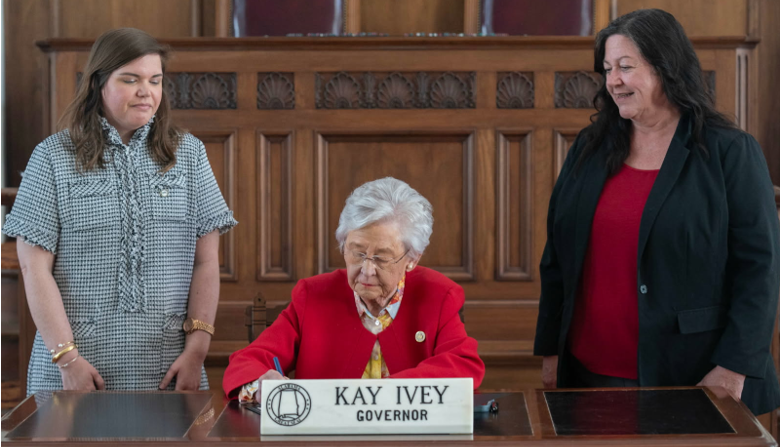
On May 8, 2025, Alabama Governor Kay Ivey signed a proclamation officially recognizing May 6–12 as National Nurses Week in the state. This annual observance aligns with the national celebration honoring nurses for their dedication, compassion, and critical role in healthcare.

The proclamation acknowledges the invaluable contributions of nurses across Alabama, highlighting their commitment to providing high-quality care and their vital presence in various healthcare settings. By designating this week, Governor Ivey emphasizes the state's appreciation for the nursing profession and encourages Alabamians to honor and support nurses in their communities.

Feature Articles
Elevating the Voice of the Frontline: Increasing Survey Participation among Nursing Staff
JW
Jacqueline Westbrook, DNP, RN, GERO-BC
JC
Ja-Lin Carter, MSN, RN, CNL
SP
Shea Polancich, PhD, RN, FAAN
AM
Aoyjai P. Montgomery, PhD, BSN
KM
Katherine A. Meese, PhD
JT
Joseph R. Travis, MSN, CRNP, FNP-C
DM
Dana M. Morson, MSN, CRNP, FNP-
CB
Cindy Blackburn, MSN, RN
TB
Toni Beam, MSN, RN, NE-BC
JW
Jennifer A. Werthman, PhD, MBA, RN
PP
Patricia A. Patrician, PhD, RN, FAAN

Declarations:

Ethical Considerations:

The project was reviewed and determined to be exempt from full Institutional Review Board (IRB) review by the University of Alabama at Birmingham IRB.(No. IRB-300009210).

Consent for Publication:

All authors consent for publication.

Availability of Data Statement:

 Data are available upon reasonable request to corresponding author.

Competing Interests:

All authors declare that we have no competing interests.

Funding:

This project is supported by the Health Resources and Services Administration (HRSA) of the U.S. Department of Health and Human Services (HHS) as part of an award totaling $2,278,815. The contents are those of the author(s) and do not necessarily represent the official views of, nor an endorsement, by HRSA, HHS, or the U.S. Government.

Authors’ Contributions:

JW and JC: Literature search, manuscript outline, design, preparation, and writing of the abstract, background, writing of methods (design), Strategies Used to Improve WE CARE Nursing Survey Response, discussion, limitation sections, conclusion sections, and creation of the table S.H and KM: Editing, interpretation of data results A.M: Data collection, writing of Survey Instrument, Data analysis write-up and results, and figure creation PP : Conceptualizing/refining the paper idea, writing Methods (The Program) section, manuscript revisions, final approval, final editing JW, JC, CB, JT, DM, and TB: Study implementation, and editing with grammatical corrections All authors reviewed and approved the manuscript

Abstract

Targeted interventions were implemented to address challenges with participation in a web-based survey administered semi-annually to nursing personnel at a large academic medical center in the southeast US. Intervention examples included face-to-face rounding, electronic links, and other incentives to address barriers like time constraints, survey fatigue, and respondent concerns with anonymity. These combined efforts resulted in a 146% increase in response rate between our baseline survey in June 2021 and January 2023. Elevating staff voices fosters collaboration, engagement, and continuous improvement in patient care quality and staff satisfaction.

Background

Low survey response rates among healthcare workers can be attributed to a myriad of factors, including time constraints due to demanding work schedules, survey fatigue due to the abundance of survey requests, a perceived lack of anonymity for respondents, and limited recognition of immediate benefits [5]. However, increasing survey participation is critical to adequately representing the voice of the healthcare workforce and obtaining representative data. The need for high-quality data to inform organizational decision-making, improve patient outcomes, and foster staff engagement and satisfaction underscores the urgency for strategic interventions to enhance survey participation levels. The purpose of this paper is to describe the success of our strategies in improving nurse participation in the organization’s nursing surveys.


Methods

Setting

This project was completed at a large academic medical center in the southeastern United States. Participants included staff nurses working on the various inpatient   nursing units within the organization.

Design

Longitudinal data was collected via survey to assess the effectiveness of interventions aimed at increasing staff nurse response rates in a survey administered semi-annually to nursing employees. The project aim was to evaluate a series of strategies designed to increase nurse survey participation over a two-year period of time. The surveys were created and distributed through the QualtricsTM electronic survey system platform. Surveys were accessible for approximately 30 days.

In 2021, surveys were distributed via email with a written invitation and a hyperlink. Building upon this foundation, subsequent years saw the introduction of additional engagement tactics. Throughout the first two-years of the WE CARE project intervention we employed various strategies to harness and enhance survey engagement. In 2022, alongside the email distribution, the WE CARE team at the medical center, initiated routine “WE CARE rounds” on day and night shifts on every inpatient unit. This fostered face-to-face interactions with frontline staff, as well as staff support and wellness breaks with snacks, candy, stickers, and games that were available on the WE CARE cart. These rounds provided an opportunity to build relationships with the staff and distribute small appreciation incentives. During survey periods, these WE CARE rounds helped to encourage survey participation. Weekly survey participation reports were provided to nursing leaders to highlight accomplishments.

By 2023, the survey strategy expanded to incorporate more diverse approaches. In addition to the email invitations, unit rounds, and incentives, the team introduced QR codes and iPads (see Table). To ensure convenience and accessibility, the QR Codes were strategically placed around the unit workspaces for easy access to the survey—on computer terminals, in restrooms, and even by the time clocks. The QR codes allowed nurses to quickly access the survey via the camera app on cellular devices. Finally, iPads without employee login identifiers were available so staff could complete surveys anonymously. Personal identifiers were limited in the survey design to safeguard respondents’ anonymity and foster an environment of trust. Additionally, the project team emphasized the confidential and non-punitive nature of the survey. Furthermore, to maximize participation, all members of nursing services were encouraged to take the survey, regardless of their specific roles or positions.

The WE CARE team utilized “talking points” to inform the staff of tangible progress achieved and ongoing initiatives stemming from the invaluable insights gleaned from prior survey responses. Providing concrete examples of how the previous survey data were used to implement positive changes demonstrated the value of survey participation. Marketing flyers with survey dates were disseminated directly to unit nurse managers (NM) and NPDSs as a proactive approach to cascade information down to frontline staff. The active advocacy and endorsement of the survey initiative by NMs and NPDSs played pivotal roles in galvanizing staff nurse participation. Weekly reminders and updates were included during leadership meetings of the Chief Nursing Officer (CNO), Associate Chief Nursing Officers (ACNO), Associate Vice President of Nursing Value, Senior Directors of Nursing, Directors of Nursing, NMs, and NPDSs to complement these efforts. These updates highlighted the importance of the survey and reaffirmed the ongoing support of organizational leadership.

Data Analyses

Four-timepoints of data were downloaded from QualtricsXM and uploaded to Microsoft Excel. The responses were separated by role.  Here, we were interested in capturing inpatient staff nurse information. The response numbers were counted using the recorded dates that were autogenerated by QualtricsXM. The recorded dates were further assessed by the number of responses by day. Graphical representations were created using Excel to show trends in  the percentages of total responses by recorded dates for each survey time point (a total of four line charts) (see Figure).

Results 

A total of 390 staff nurses participated in the baseline survey in June 2021. In June 2022, staff nurse participation increased to 808 nurse respondents—a 107% increase. In January 2023 there were 961 staff nurse participants, marking a 146% increase from the baseline of 390 participants. There was a decrease in July 2023 to 744 participants (23% reduction) compared to January 2023; however, this represented a 91% increase compared to the original survey in 2021. Although we had planned to administer the WE CARE nurse surveys over a period of 30 days, our graphs revealed that the surveys were left open for varied time periods: June 2021 – 33 days; June 2022 - 37 days; January 2023- 36 days; July 2023 – 33 days. The extra days were added to attempt to capture maximum participation, however, only in June 2022 did the extra days account for a large number of additional responses, as explained in Limitations below.

Discussion

To increase staff nurse survey participation, the WE CARE team implemented a multifaceted approach which included unit rounding, talking points, QR Codes, and iPads to enhance convenience and provide many communication channels for survey marketing and updates. This concerted effort mitigated privacy concerns and created a more efficient and effective process for survey completion. The change in survey participation from 390 to 961 staff nurses suggests the effectiveness of the implemented strategies, which resulted in larger response numbers and potentially more representative feedback from the bedside staff nurse workforce. Research studies consistently show that larger sample sizes yield more reliable and valid results [5, 6]. Even though participation decreased during the last survey time period, it was still significantly higher than at baseline. This decrease may have been result of survey fatigue due to the 6-month intervals between re-surveying. The devised strategies were a successful attempt to address the barriers to participation encountered by nurses, particularly the bedside staff nurses. Time constraints and survey fatigue are common challenges in healthcare settings [5]. The project navigated these barriers through the execution of unit rounds, provision of incentives, and integration of accessible technologies such as conveniently located QR Codes and iPads. Studies have indicated that addressing these barriers can substantially enhance survey response rates [9].

The year-to-year increase in the number of survey participants demonstrates the value of our simple but effective approach to obtaining nurse insight through survey participation. By proactively implementing measures to bolster survey response rates, nursing leaders can capture valuable insights, identify areas for improvement, and enhance the overall quality of patient care. Leadership engagement and support are pivotal in promoting survey participation [10].  The proactive engagement of NMs and NPDSs and consistent leadership reminders underscore the organization’s dedication to staff engagement. Research has shown a direct link between staff engagement and improved outcomes [22]. By identifying areas for improvement through surveys, healthcare organizations can implement targeted interventions, ultimately enhancing the quality of care provided to patients. Having the WE CARE team report back to front line nurses the actions taken by nurse leaders to address concerns revealed in prior surveys was yet another way to let staff know that their voice does indeed matter.

Research suggests that visible support and encouragement from leadership positively influence employees’ willingness to participate in surveys [1].  Ensuring anonymity and building trust are essential for honest responses [23]. By limiting personal identifiers, providing iPads, and emphasizing anonymity and non-punitive, the team attempted to create a secure environment. Using iPads enhanced participation and addressed concerns about anonymity, especially for individuals worried about maintaining privacy, without being logged on to a computer with their credentials or having to take the survey from their personal devices. Studies have shown that anonymous surveys yield more candid responses, more accurately reflecting employees’ opinions and experiences [2].

Potential challenges in sustaining the strategies implemented include budget constraints, evolving technology, and changing staff dynamics. Research indicates that long-term sustainability requires continuous adaptation and monitoring of survey methods [24]. In addition to survey fatigue among respondents, there is a potential risk of response fatigue among leaders who must frequently react to the findings. Balancing anonymity with analytic concerns represents another challenge. By conducting an anonymous survey there is a great opportunity for increased psychological safety that allows respondents to feel more comfortable disclosing sensitive information. However, on the downside, it reduces the ability to align results with specific demographic factors or to conduct true longitudinal analyses of respondents over time.                 

Limitations

Conclusions

Elevating the voice of nurses is vital for fostering a culture of collaboration, engagement, and continuous improvement in healthcare organizations. By implementing strategies to increase survey response rates, healthcare institutions can capture valuable insights, identify areas for improvement, and enhance the overall quality of patient care. Through transparent communication, simplified surveys, confidentiality, face-to-face marketing, incentives, and leadership engagement, healthcare organizations can create an environment where frontline staff feel empowered to share their experiences, ultimately improving patient outcomes and staff satisfaction.


Article references 

  1. Munn LT, Jones CB. Conducting research in hospitals: Methods to maximize survey response rates among nurses. J Nurs Adm. 2020;50(4):187–189. https://doi.org/10.1097/NNA.0000000000000865
  2. Murdoch M, Simon AB, Polusny MA, Bangerter AK, Grill JP, Noorbaloochi S, Partin, MR. Impact of different privacy conditions and incentives on survey response rate, participant representativeness, and disclosure of sensitive information: a randomized controlled trial. BMC Med Res Methodol. 2014;14(90). http://doi.org/10.1186%2F1471-2288-14-90
  3. Booker QS, Austin JD, Balasubramanian BA. Survey strategies to increase participant response rates in primary care research studies. Fam Pract. 2021;38(5):699-702. https://doi.org/10.1093/fampra/cmab070
  4. Anusiewicz C, Fifolt M, Montgomery A, Patrician P. Survey methodology and response rates among Alabama inpatient staff registered nurses. Med Surg Nursing. 2021;30(6):407-418. Accessed November 7, 2023.
  5. Ellis LA, Pomare C, Churruca K, Carrigan A, Meulenbroeks I, Saba M, Braithwaite J. Predictors of response rates of safety culture questionnaires in healthcare: a systematic review and analysis. BMJ Open12:e065320, 2022. https://doi.org/10.1136/bmjopen-2022-065320
  6. Phillips AW, Reddy S, Durning SJ. Improving response rates and evaluating nonresponse bias in surveys: AMEE Guide No. 102, Med Teach.2016;38(3):217-228. https://doi.org/10.3109/0142159X.2015.1105945
  7. Shiyab W, Ferguson C, Rolls K, Halcomb E. Solutions to address low response rates in online surveys. Eur J Cardiovasc Nurs. 2023;22(4):441–444. https://doi.org/10.1093/eurjcn/zvad030
  8. Timmins F, Ottonello G, Napolitano F, Musio M E, Calzolari M, Gammone M, Catania G, Zanini M, Aleo G, Sasso L, Bagnasco A. The state of the science-the impact of declining response rates by nurses in nursing research projects. J Clin Nurs. 2023;32(7-8):e9–e11. https://doi.org/10.1111/jocn.16597
  9. Cho,YI, Johnson TP, VanGeest JB. Enhancing surveys of health care professionals: A meta-analysis of techniques to improve response. Eval Health Prof. 2013;36(3):382-407. https://doi.org/10.1177/0163278713496425
  10. Higgins LW, Shove, JA, Bilderback AL, Lorenz HL, Martin SC Rogers DJ, Minnier TE. Hospital nurses’ work activity in a technology-rich environment: A triangulated quality improvement assessment. J Nurs Care Qual. 2017;32(3):208-217. http://doi:10.1097/NCQ.0000000000000237
  11. Patrician PA, Travis JR, Blackburn CB, Carter J, Hall A, Meese KA, Miltner RS, Montgomery A, Stewart J, Ruffin A, Morson DM, Polancich S. Workforce engagement for compassionate advocacy, resilience and empowerment (WE CARE): An evidence-based wellness program. Nurs Adm Q. 2024;48(2):165-179. https://doi.org/10.1097/NAQ.0000000000000626
  12. Protection of Human Subjects. (2018). Code of Federal Regulations, Title 45. Part 46, (45 CFR 46.104(d)(2)(2018 Requirements). https://www.hhs.gov/ohrp/regulations-and-policy/regulations/45-cfr-46/common-rule-subpart-a-46104/index.html
  13. Dyrbye LN, Satele D, Shanafelt T. Ability of a 9-item well-being index to identify distress and stratify quality of life in US workers. J Occup Environ Med. 2016;58(8):810-817. doi:10.1097/JOM.0000000000000798
  14. Dyrbye LN, Johnson PO, Johnson LM, Satele DV, Shanafelt TD. Efficacy of the Well-Being Index to identify distress and well-being in U.S. nurses. Nurs Res. 2018;67(6):447-455. doi:10.1097/NNR.0000000000000313
  15. Dolan ED, Mohr D, Lempa M, et al. Using a single item to measure burnout in primary care staff: a psychometric evaluation. J Gen Intern Med. 2015;30(5):582-587. doi:10.1007/s11606-014-3112-6
  16. Connor KM, Davidson JR. Development of a new resilience scale: The Connor‐Davidson Resilience Scale (CD‐RISC). Depr Anx. 2003;18(2):76-82. doi:10.1002/da.10113
  17. Vaishnavi S, Connor K, Davidson JR. An abbreviated version of the Connor-Davidson Resilience Scale (CD-RISC), the CD-RISC2: psychometric properties and applications in psychopharmacological trials. Psychiatry Res. 2007;152(2-3):293-297. doi:10.1016/j.psychres.2007.01.006
  18. Eisenberger R, Huntington R, Sava D. Perceived organisational support. J Appl Psychol. 1986;71(3):500-507. doi:10.1037/0021-9010.71.3.500
  19. Worley J, Fuqua D, Hellman C. The survey of perceived organizational support: which measure should we use? SA J Indust Psych. 2009;35(1). Art #754, 5 pp. DOI:10.4102/sajip.v35i1.754.
  20. Meese KA, Colon-Lopez AA, Montgomery AP, Boitet LM, Rogers DA, Patrician PA Rules of engagement: the role of mistreatment from patients in the nurse, physician and advanced practice provider experience. Patient Exper J. 2022;9(2):36-45.
  21. Meese KA, Boitet LM, Sweeney KL, Gorman CA, Nassetta LB, Patel N, Rogers DA. Don’t go: Examining the relationships between meaning, work environment and turnover intention across the entire healthcare team. J Multidiscip Healthc. 2024;17:353-366. https://doi.org/10.2147/JMDH.S437816
  22. Janes G, MillsT, Budworth L, Johnson J, Lawton R. The association between healthcare staff engagement and patient safety outcomes: A systemic review and meta-analysis. J Patient Saf. 2021;17(3):207-216. https://doi.org/10.1097/PTS.0000000000000807
  23. Gille F, Brall C. Limits of data anonymity: lack of public awareness risks trust in health system activities. Life Sci Soc Policy. 2021;17(1):7. https://doi.org/10.1186/s40504-021-00115-9
  24. Dillman D, Smyth JD, Christian LH. Internet, phone, mail, and mixed –mode surveys: The tailored design method. Hoboken, NJ: John Wiley & Sons, Inc., 2014.
Minimally Invasive Cosmetic Injections in Alabama
Laura Hart, DNP, FNP-BC

For more than 20 years, Alabama Certified Registered Nurse Practitioners (CRNPs) have practiced alongside of a 2004 Alabama Board of Medical Examiners (ABME) opinion that the prescribing and administration of botulinum toxin a products and dermal fillers were the exclusive practice of medicine requiring that these procedures be performed by a licensed physician (Dixon, 2004). While all 50 states classify the use of minimally invasive cosmetic injectables as the practice of medicine, a review of legislation, laws, rules, and regulatory board opinions of the 50 states shows that none have limited the prescribing and administration of these legend drugs to physicians only, except Alabama. In fact, a large majority of states allow administration of botulinum toxin A products and dermal fillers by a registered nurse on the order of a lawful prescriber.

Cosmetic Injectable Safety

Botulinum toxin A products are generally considered safe injectable medications. While serious adverse events occur, they are infrequent. In a 2021 study of adverse events resulting from the use of botulinum toxin A products, 43,354 adverse events were identified in the Food and Drug Administration Database (Ahsanuddin, Roy, Nasser, Povolotsky, & Paskhover), which included minor adverse events such as treatment ineffectiveness and redness at the injection site. The number of years reviewed for this study was not disclosed, however, there is a reference to over 7 million botulinum toxin A product injections administered in 2018. Regardless of the number of years reviewed to achieve the identified number of adverse events, when compared with the number of botulinum toxin A injections given in 2018 alone, the percentage of complications is significantly less than 1% (0.00619%). It is worth noting that serious adverse events from botulinum toxin A products were most often associated with treatment for medical conditions, such as chronic migraines, assumed to be due to the larger doses used for these conditions (Ahsanuddin et.al., 2021).

Like botulinum toxin A products, dermal fillers are considered generally safe for administration. Just as with botulinum toxin A products, serious adverse events can result from the use of dermal fillers, but they are rare. As part of a statement issued by the ABME on advanced practice providers' use of cosmetic injectables (2024) several journal articles are presented as attachments to support "a weighty risk of harm" (p.7) should CRNPs and other non-physician providers be allowed to inject dermal fillers for cosmesis. However, a review of these attachments demonstrates an adverse event percentage far below 1% compared against the millions of dermal filler injections that are safely administered by a variety of injectors worldwide every year.

Request and Results

A physician's request for delegation rules for botulinum toxin A products and dermal fillers was submitted to the ABME on or about the same time as a nursing request to add these procedures and products to the CRNP standard protocol and formulary was submitted to the Alabama Board of Nursing (ABN). The requests were first discussed in November 2024 at a scheduled meeting of the Joint Committee of the ABN and ABME (Joint Committee). There has been progress on a cosmetic injection protocol for CRNPs and using neuromodulators (i.e., botulinum toxin A products). The Joint Committee approved a protocol proposal to allow CRNPs to prescribe and administer neuromodulators for cosmetic purposes. As of May 23, 2025, this proposal has been approved by both the ABME and the ABN, and certain CRNPs will be able to request these skills in the coming days.

Discussion

While the Joint Committee proposal is considered substantial progress toward CRNP alignment with national practice, there are significant concerns with the limitations that remain in the protocol as it is currently written. Among the most concerning protocol limitations are the requirement for the on-site presence of the collaborating physician when performing minimally invasive cosmetic injections with neuromodulators and the requirement that all botulinum toxin a products must be purchased from the supplier or manufacturer by the collaborating physician. These restrictions essentially block the ability of CRNPs, with private practices and no on-site physician from benefiting from the proposed protocol.

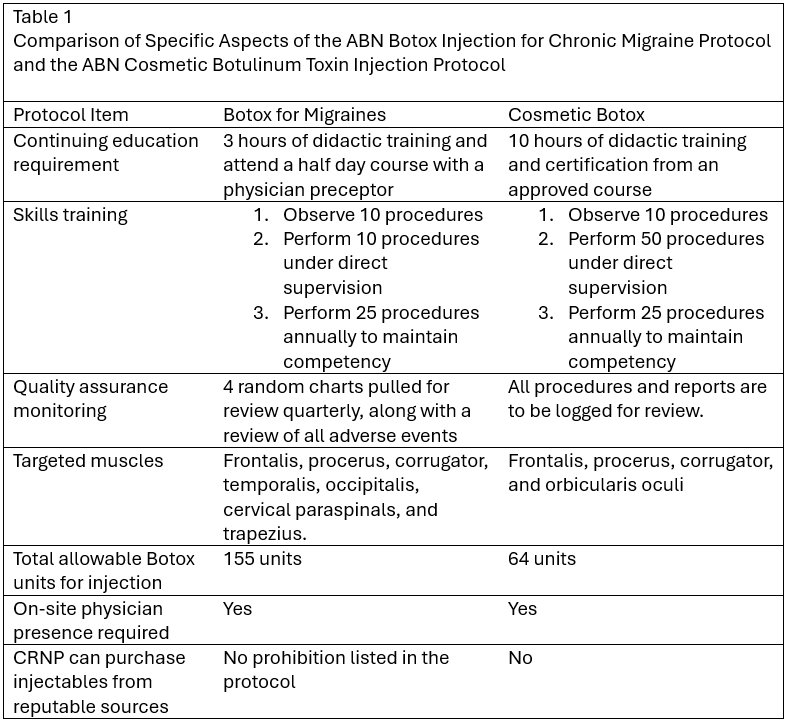
When comparing the ABN Botox Injection for Chronic Migraines Protocol to the Cosmetic Botulinum Toxin Protocol, other concerns regarding the proposed protocol for the use of cosmetic neuromodulators are revealed. Among these concerns are (1) the increased training requirements, (2) the number of procedures that must be completed under direct observation for initial approval of this skill, (3) the number annual procedures that must be completed to continue to have approval to perform this skill, and (4) the requirement that all procedures must be logged for physician review. The ABN Botox Injection for Chronic Migraine protocol and the proposed Cosmetic Botulinum Toxin Injection Protocol share overlapping targeted musculature for injections. A comparison of selected aspects of the protocols listed in this paragraph is available in Table 1.

It has been argued that minimally invasive cosmetic treatments are not essential health care services, and the inability of CRNPs to perform these services will not affect the health of Alabama communities. This sounds like a logical argument. However, CRNPs already receive lower reimbursement from third-party payers than physicians for providing the same service, and CRNPs must pay collaborative fees (sometimes thousands of dollars monthly) to physicians simply to engage in practice. The addition of minimally invasive cosmetic injectables, as an adjunct to primary care services, has the potential to increase the viability of their practice, keeping primary care services in communities with health care provider shortages.

The Botulinum Toxin Injection Protocol represents step forward for Alabama CRNP practice. However, considering the safety of botulinum toxin a products when used according to manufacturer recommendations, the proposed Cosmetic Botulinum Toxin Injection Protocol provides an opportunity for continued removal of substantial barriers to CRNP practice. The portion of the original request for CRNP prescribing and administering dermal fillers is currently tabled.

Article references 

Ahsanuddin, S., Roy, S., Nasser, W., Povolotskiy, R., & Paskhover, B. (2021). Adverse events associated with Botox as reported in a Food and Drug Administration database. Aesthetic Plastic Surgery, June, 45(3), 1201 - 1209.

Alabama Board of Medical Examiners (2025.) Statement of Request to Train and Delegate Injection of Neuromodulators and Dermal Fillers for Cosmetic Purposes. Retrieved from https://www.albme.gov/uploads/pdfs/Statement-APPNeurotransmitters12.20.2025.pdf

Alabama Board of Nursing (n.d.) Alabama Board of Nursing Botox Injection for Chronic Migraine. Retrieved from https://www.abn.alabama.gov/wp-content/uploads/2023/10/ABN-BOTOX-Chronic-Migraine.pdf

Alabama Board of Nursing (n.d.) Alabama Board of Nursing Cosmetic Botulinum Toxin Injection Protocol. Unpublished protocol, Montgomery, AL.

Dixon, Larry. (October 21, 2004) Letter to the Alabama Board of Nursing. [Alabama Board of Medical Examiners Opinion Concerning Botox, Restylane, Collagen, and Mesotherapy].

Get Involved
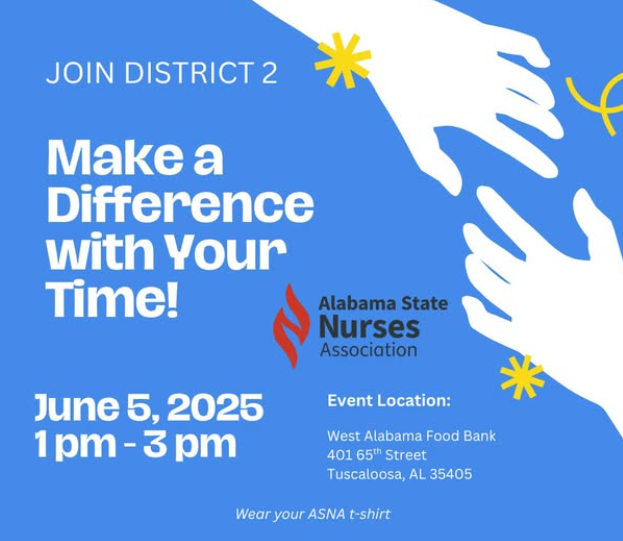
Volunteer With District 2
June 5, 2025

Ethics, Equity, and Engagement Conference
June 6, 2025

Where: DCH Regional Medical Center
809 University Boulevard East
Tuscaloosa, AL 35401

When: Friday, June 6th, 2025 - 8:00 AM - 2:00 PM CT

Meet the Speakers

Kimberly K. Rucker, JD

Kimberly K. Rucker, JD Owner of Rucker Legal Solutions in Huntsville AL. Mrs. Rucker has been licensed to practice law in Alabama for more than 15 years. Her practice focuses on business law, civil litigation, employment law, child dependency and family law. Mrs. Rucker is also a certified guardian ad litem, representing the interests of children in litigation. She earned her bachelor’s degree from Alabama State University in Montgomery, Alabama and her law degree from the University of Alabama School of Law in Tuscaloosa, Alabama.

Felesia Bowen PhD, DNP, APRN, PPCNP-BC, FAAN

Felesia Bowen PhD, DNP, APRN, PPCNP-BC, FAAN UAB School of Nursing Associate Dean and Professor for Assess and Engagement, leads the charge to promote nursing as a highly regarded career choice from elementary through high school. Under DR. Bowen's leadership, UABSON started a Nurse Academy at Huffman High School, which is open to all Birmingham City Schools with the goal to have certified as a Patient Care Tech (PCT) by graduation. She is the recent President-Elect of the National Association of Pediatric Nurse Practitioners, is a nationally certified pediatric nurse practitioner, and has distinguished herself as a leader in the areas of pediatric asthma, health disparities, and health equity. She has a strong academic nursing background with expertise in teaching, service and research. She earned her BSN, Tuskegee University, Tuskegee AL, MSN Rutgers University-Newark, DNP Educational Leadership and Administration PhD Nursing Science Columbia University.

REGISTER HERE

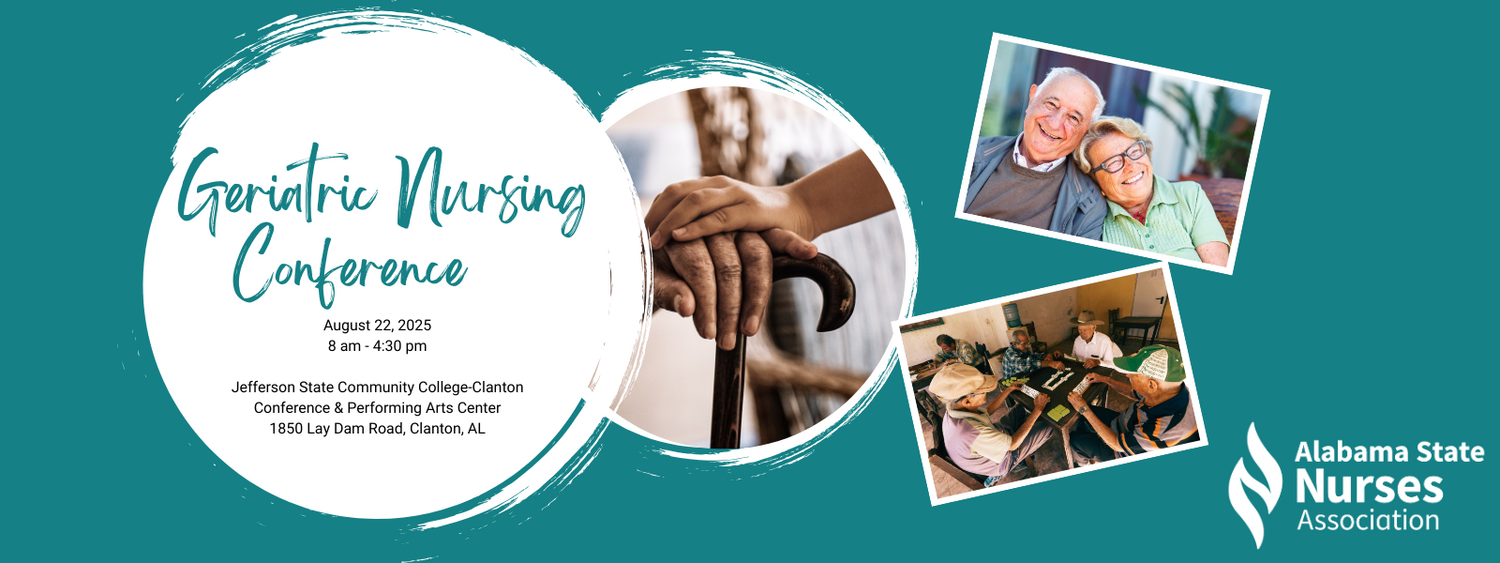
Geriatric Nursing Conference
August 22, 2025

Where: Jefferson State Community College Chilton-Clanton Campus
1850 Lay Dam Road
Clanton, AL 35045

When: Friday, August 22nd, 2025 - 8:00 AM - 4:30 PM CT

Cost: FREE

Join us for a day of continuing education. The ASNA Geriatric Nursing Conference is designed to bring together healthcare professionals dedicated to enhancing the care of older adults. 

REGISTER HERE

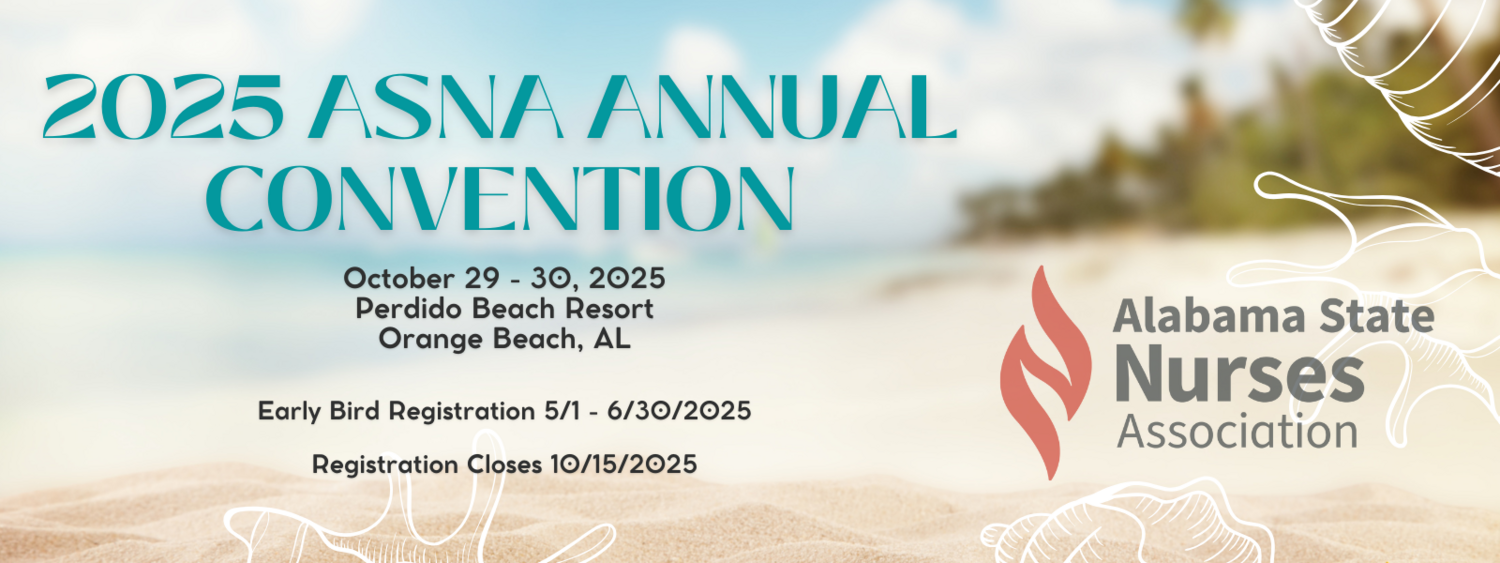
2025 ASNA Annual Convention
October 29-30, 2025

The Alabama State Nurses Association (ASNA) is pleased to announce the 2025 Annual Convention. The ASNA Annual Convention consists of a meeting of the House of Delegates to conduct the business of the association followed by an ASNA tradition, the Mabel Lamb Continuing Education Sessions. This year the continuing education will focus on Leadership.

This year's Annual Convention will be held at the Perdido Key Resort in Orange Beach, Alabama. The Convention will open with a meeting of the House of Delegates on October 29, 2025, and conclude with Mabel Lamb Leadership Education Sessions on October 30, 2025. 

Each year, the ASNA Annual Convention brings nursing leaders from across the state together for fellowship, networking, and education. A sense of camaraderie is palpable in the halls as old friends greet one another and new friends are welcomed. The following links are designed to help you gain information and register to participate in this exciting experience with other Alabama nurses. We hope to see you all there. Better yet, be a delegate for your District and help shape the future of ASNA. 

Proposed 2025 Annual Convention Agenda - coming soon

Participant Registration

Sponsor/Exhibitor Registration - coming soon

Conference Hotel and Room Block - coming soon

Area Hotels and Attractions - coming soon

2025 Delegate Responsibilities

2025 Call for Resolutions 

2025 Call for Officers - Deadline August 20, 2025

  • Officers with expiring terms

    • Vice President (eligible for re-election)

    • Secretary (eligible for re-election)

    • Commission on Professional Issues (4 positions, none eligible for re-election)

Nursing News
Congress Introduces Safe Staffing Bill on International Nurses Day
American Nurses Association

On May 12, 2025 – International Nurses Day – Members of Congress reintroduced the Nurse Staffing Standards for Hospital Patient Safety and Quality Care Act (H.R. 2530), aiming to address one of the most pressing issues facing the nursing profession and patient care: unsafe staffing levels in hospitals. This landmark bill has been applauded by nurses and their advocates.

Key Provisions of the Safe Staffing Bill

  • Mandatory Minimum RN-to-Patient Ratios: The bill sets specific minimum ratios for all hospital units, such as 1:1 for trauma emergency and operating rooms, 1:2 in critical care, and 1:4 in medical-surgical units, among others.
  • Whistleblower Protections: Nurses who speak out about unsafe staffing conditions will be protected from retaliation.
  • Transparency and Accountability: Hospitals will be required to post staffing ratios and maintain records to ensure compliance.
  • Investment in Nurse Training and Retention: The legislation includes measures to support ongoing education and career development for nurses.

What Nurses and Their Supporters Are Saying

Nurse leaders and organizations have voiced strong support.

  • Lead bill sponsor Rep. Jan Schakowsky emphasized, “Study after study shows that safe nurse-to-patient staffing ratios result in higher quality care for patients, lower health care costs, and a better workplace for nurses. It is past time that we act on the evidence, give nurses the support they deserve, and put patients over profits.”
  • American Nurses Association President, Jennifer Mensik Kennedy, said: “Nurses are expected to provide excellent care, but they often work in conditions that make that exceedingly difficult. Nurses must practice in work environments where their professional and personal well-being is supported and protected. Policy coupled with other nurse-led staffing standards and solutions will improve nurses’ working environment and patient outcomes.”
  • RN and NNU president, Nancy Hagans, said: “Our patients deserve high-quality care, and nurses have always stood up to protect our patients. It’s time hospital managers are mandated to staff our units safely for our patients’ sake and to actually give nurses the resources and respect we deserve.”

Why Now? The Context of International Nurses Day

This legislative push coincided with International Nurses Day on May 12, a global celebration of the nursing profession and a call to action for better support and recognition. The International Council of Nurses (ICN) chose the theme “Caring for nurses strengthens economies” for 2025, underscoring the vital link between nurse wellbeing, patient outcomes, and the health of entire communities.

Dr. Pamela Cipriano, ICN President, highlighted the urgency: “For our 2025 IND theme we are highlighting the importance of supporting the health and wellbeing of nurses, who are vital to the functioning of health systems globally. Nurses face numerous challenges: physical, mental, emotional and ethical, and it is imperative that we address these challenges in a way that promotes their overall health.”

What’s Next?

The introduction of the Nurse Staffing Standards for Hospital Patient Safety and Quality Care Act marks a significant milestone in the ongoing fight for safe staffing. Nurses are encouraged to stay informed, advocate for passage, and share their stories with lawmakers and the public.

As Rep. Schakowsky put it, “It is past time that we act on the evidence, give nurses the support they deserve, and put patients over profits. Let’s get it done!”

The ANA and National Nurses United urge nurses to advocate for the bill, highlighting its potential to improve patient safety, reduce nurse burnout, and help rebuild the nursing workforce pipeline.

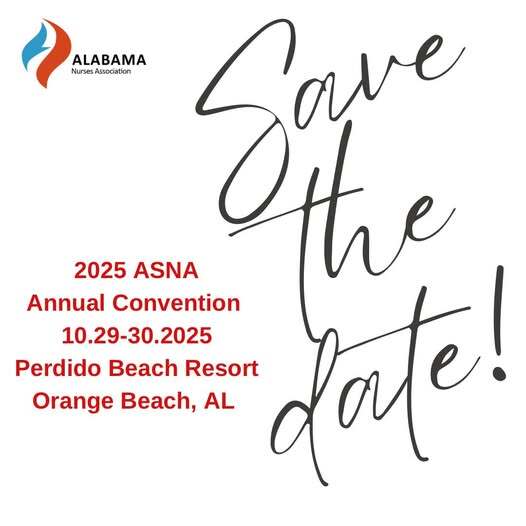
Save the Date - ASNA Annual Conference

Mark your calendar.  The Alabama State Nurses Association has set the date for our annual conference in 2025.  

It will be held at Perdido Beach Resort in Orange Beach on October 29th and 30th of 2025.  

Every year this conference brings together nursing leaders from across Alabama for learning, networking, and more.  Make a plan to join us and keep your eyes peeled for more details including speaker lineup in the future.

Membership
Advertise in This Newsletter

Nursing associations are among the most trusted partners in healthcare. Align your brand with our association to support us, deliver your message alongside editorial level content, build brand awareness, & reach our highly engaged / established audience. 

For sponsorship rates and information within this official state nursing association publication, please contact Nursing Network at advertising@nursingnetwork.com 

We appreciate your support!

Get in touch
Connect With Us
Facebook Instagram LinkedIn YouTube
Terms and Conditions Cookie Policy Privacy Policy Contact Us