RN Idaho
Table of Contents
Information About the Publication
Idaho Awards and Nursing Daisy Award Recipients
ANA-Idaho Nursing & Voting: Your Voice Matters
Idaho Center for Nursing Executive Director Update
Nurse Leaders of Idaho Season of Giving
Nursing News Idaho Coalition for Safe Healthcare: Inviting Nurses as Helpers Urban-Rural Differences Among Children Referred to a Lifestyle Medicine Program: A Brief Report
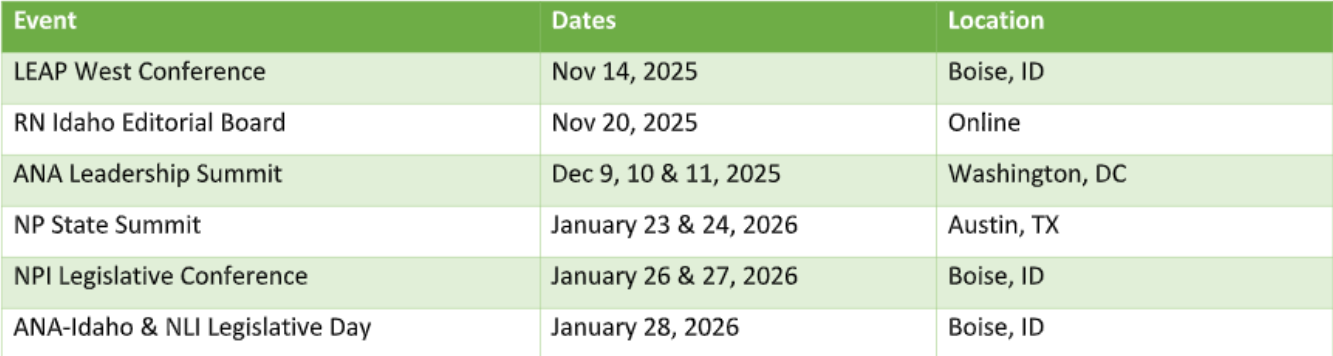
Save the Date
In Memorium
October 2025
Volume 48 · Issue 3
Information
About the Publication

RN Idaho is published by Idaho Center for Nursing

2210 S. Broadway Ave, STE 201, Boise, ID 83706

Direct Dial: 208-918-3282

Email: rnidaho@nurseleaders.org

Website: www.idahonurses.nursingnetwork.com

RN Idaho is peer reviewed and published by the Idaho Center for Nursing. RN Idaho is distributed to every Registered Nurse and Licensed Practical Nurse licensed in Idaho, state legislators, employer executives, and Idaho schools of nursing. The total quarterly circulation is over 34,500.

RN Idaho is published every January, April, July, and October.

Editor:

Sara F. Hawkins, PhD, RN

Editor Emerita:

Barbara McNeil, PhD, RN-BC

Randall Hudspeth, PhD, MBA, MS, APRN-CNP, FAANP

Executive Director:

Teresa Stanfill, DNP, RN, NEA-BC, RNC-OB

Editorial Board:

Michelle Anderson, DNP, APRN, FNP-BC, FAANP

Sandra Evans, MAEd, RN

Ryoko Kausler, PhD, FNP-BC, MN, RN, CCRC

Katie Roberts, MSN, RN

Laura J. Tivis, PhD, CCRP

RN Idaho welcomes comments, suggestions, and contributions. Articles, editorials and other submissions may be sent directly to the Idaho Center for Nursing office via mail or e-mail. Visit our website for information on submission guidelines.

Idaho Awards and Nursing
Daisy Award Recipients

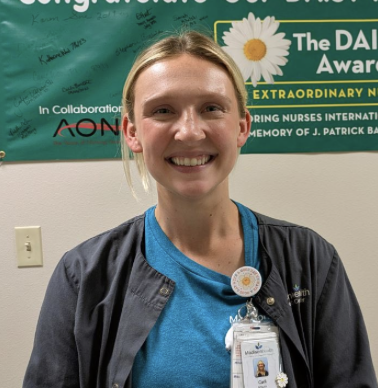
Carli Barton

Madison Health - Rexburg

Earlier this month, I went into labor to deliver my son. This happened to be a long process, so I had Carly take care of me for both the start and the end of the process. The first part of this was nerve-racking as I didn't understand just how difficult labor was. I was surrounded by machines I didn't understand, and I was in an unfamiliar place. Carli was extremely comforting, positive, and did a great job of explaining things to me in a way I could understand. Her gentle, fun, kind, and attentive approach helped me feel like I was the most important person in the world that night, though I doubt I was the only patient she had. She did a great job of checking on me, and I felt like she genuinely cared about how I was doing. She always looked to do things that helped me feel comfortable, like refreshing my ice chips and recognizing my potential wants and needs before I even expressed them.

When she finished up her shift covering the first portion of my labor, I was sad to see her go. You can imagine how delighted I was to have her as my nurse again the next day, as I was still in labor. In the intervening time, my baby's O2 had taken a dive twice, and I'd spent the day in bed laboring. Needless to say, I was a bit worried and tired by the time Carli returned. When I finally progressed to the point of pushing, she once again did a great job of explaining how to go about it and it was very encouraging. After an hour and a half of pushing, I was spent, though what really pushed me over the edge was learning my baby wasn't even close enough to be vacuumed out. I had a proper meltdown at that point, but Carli was once again very understanding and took the time to give me a proper 10+ minute pep-talk that left me feeling much better. She helped with the ensuing C-section, remaining calm and positive as I went under the knife. It's partially thanks to her that I was able to remain so calm even though this! All in all, Carli is the kindest, most positive, attentive, and hard-working nurse I could have asked for in this intense experience!

ANA-Idaho
Nursing & Voting: Your Voice Matters
President's Message
Erica Yager, MSN, RN, NEA-BC, President of ANA-Idaho

As nurses, we advocate for our patients every day—but advocacy doesn't stop at the bedside. With election season approaching, it's a powerful time to reflect on how our voices can shape healthcare policy, workplace conditions, and community well-being through voting.

Why It Matters:
Nurses are the most trusted profession in America. When we vote, we bring our frontline experience to the ballot box, influencing decisions that affect staffing ratios, public health funding, access to care, and more.

What You Can Do:

  • Check your voter registration status
  • Know your local election dates and deadlines
  • Learn about candidates and ballot measures that impact healthcare
  • Encourage your colleagues to vote—consider organizing a "Nurses Vote" badge sticker or breakroom info board

Resources to Help You Get Started:

  • Voteidaho.gov -- Check registration, find deadlines, and request absentee ballots
  • Nurses on Boards Coalition -- Learn how nurses are influencing policy
  • ANA's Nurses Vote Campaign -- Advocacy tools and education

Let's continue to lead with compassion, knowledge, and civic engagement. Your vote is your voice—use it to advocate for a healthier future.

Idaho Center for Nursing
Executive Director Update
Teresa Stanfill, DNP, RN, NEA-BC, RNC-BC

Hello and happy fall! As we enter this season, I find myself focused on elections and voting. The
membership associations supported by the ICN (ANA-Idaho, Nurse Leaders of Idaho, and Nurse
Practitioners of Idaho) all have their elections and voting on bylaws changes in the fall.

Active participation in your professional membership association is one of the most meaningful
ways to influence the future of your field. Membership associations exist to advance the
profession, advocate for members, and uphold standards of excellence—but they rely on
engaged professionals to make that vision real. By being involved, you contribute your
experience, perspective, and passion to shaping the direction of your profession, ensuring that
decisions reflect the realities of practice and the values of those who do the work every day.

Serving on committees provides a hands-on way to contribute to specific areas such as
education, policy, practice standards, or leadership development. Committee work connects
you with peers who share your interests and challenges, offering opportunities to learn from
one another and to develop leadership skills in a collaborative setting. Whether you’re helping
plan a conference, reviewing scholarship applications, or drafting position statements,
committee involvement builds both professional credibility and personal fulfillment.

Running for elected office takes engagement to the next level. Serving as an officer or board
member allows you to help set priorities, guide strategy, and represent the voice of your
colleagues. Leadership within a professional association not only enhances your own growth
and visibility but also provides a platform to advocate for the issues that matter most to you
and your community. These roles strengthen the organization and ensure its leadership
remains responsive, forward-thinking, and inclusive.

Finally, exercising your right to vote—whether for elected officers or proposed bylaws
changes—is fundamental to the democratic health of your association. Voting ensures that
leadership and governance decisions truly represent the will of the membership. Even if you
cannot serve directly, your participation in elections and policy votes keeps the organization
accountable and member-driven. Together, these acts of engagement—serving, leading, and
voting—sustain strong professional associations that, in turn, strengthen the profession as a
whole.

Explore Top Rated Nursing Programs

Education at every step. Quickly access top schools and programs by degree level & educational background. (Online and In-person options)

RN to BSN Programs

MSN Programs

Nurse Practitioner Programs

DNP Programs

SPONSORED
Nurse Leaders of Idaho
Season of Giving
President's Message
Brie Sandow, MSN, RN, NEA-BC - NLI President

Leadership is not only about vision and influence—it’s also about generosity. True leaders give
of their time, their resources, and their knowledge to strengthen their communities and lift
others up. In every profession, those who lead effectively do so by sharing what they know,
mentoring others, and creating opportunities for growth. This spirit of generosity builds trust,
fosters collaboration, and inspires others to do the same.

As we enter the holiday season, it’s a natural time to reflect on the many ways we can give
back. For some, that may mean volunteering time to a local organization, offering mentorship
to a colleague or student, or supporting professional initiatives that help others succeed. For
others, it may mean a financial contribution—whether to a scholarship fund, a charitable
organization, or a community program that supports those in need. Every act of generosity,
large or small, makes a difference.

This season can be a challenging time for many individuals and families who are struggling with
financial hardship, health issues, or loneliness. Leaders have a unique opportunity to model
compassion and empathy by extending help where it’s needed most. Your kindness may come
in the form of a donation, a meal, or simply a moment of understanding and encouragement.
When we act with generosity, we strengthen the fabric of our communities and uphold the
values that define true leadership.

As you celebrate this holiday season, consider how you can share your gifts—whether through
service, mentorship, or support for those who have less. Giving back not only benefits others; it
enriches your own sense of purpose and connection. Leadership rooted in generosity has a
ripple effect that reaches far beyond any one season, inspiring others to give, care, and lead
with heart all year long.

Nursing News
Idaho Coalition for Safe Healthcare: Inviting Nurses as Helpers
LG
Leslie Gunnerson, BSN-RN, C-ONQS

Disclaimer: The views and opinions expressed in this op-ed are those of the author and do not necessarily reflect the views or positions of any entities they represent.

Fred Rogers regularly recounted stories from his childhood. One story of note goes like this (Goodreads, 2025): "When I was a boy and I would see scary things in the news, my mother would say to me, 'Look for the helpers. You will always find people who are helping." What a simple and valuable reminder. I think of it often. Look for the helpers.

I became a registered nurse in 1992 and have since worked in Idaho caring for patients in the area of maternal-infant health with the bulk of my clinical years spent in the Neonatal Intensive Care Unit (NICU) as a bedside RN. While the NICU environment is specialized and intense, it is also fascinating and special. Joy and suffering go hand in hand. It is a close-knit community, and I became one more helper on the team.

Early on, I recognized that success often happened because I was not alone as I cared for patients. Whether a difficult IV start, a challenging family situation, or a resuscitation, providing effective care was possible only because of the clinical network of teammates: physicians, nurses, respiratory therapists, pharmacists, radiologists, surgeons, support staff, lab technicians, environmental services, secretaries, volunteers, and others. Each shift brought learning opportunities, stress, and occasional heartbreak. We handled it together.

Since moving away from the NICU and into other areas of care, I've continued to find supportive and capable peers. A few years ago, I volunteered to join another group of helpers: the Idaho Coalition for Safe Healthcare (ICSH) (https://www.idahocsh.org/). This remarkable non-profit organization---formed during the summer of 2022---was a response to legislative changes that altered the legal landscape, creating significant safety gaps for patients across Idaho (ICHS,2023a). Almost immediately, standards of care were shaken, prompting an exodus of physicians from our state. This exodus continues today.

Both progress and growth of the ICSH have been rapid as the coalition has evolved around fundraising efforts, networking, education, and relationship building. Throughout, ICSH's focus has firmly remained on the protection of patient rights, promotion of evidence-based care, and steadfast support of Idaho's healthcare community (ICSH, 2023b). For the past three years, coalition members have connected in virtual meetings and in person with community leaders, clinical colleagues, and private citizens across Idaho. These conversations have underscored the importance of ICSH's work.

The recently revised American Nurses Association [ANA] (2021) scope of practice frames the nature of nursing (Chapter 1) as taking place "wherever there is a patient in need of care and whenever there is a need for nursing knowledge, compassion, and expertise" (ANA,2021, p.3). The ANA Scope includes a long list of responsibilities, but in essence, whenever we look for the helpers, we will always spot nurses in the mix. Each day, as nurses, we support and protect the fundamental rights of patients to have accurate and thorough healthcare information and to make evidence-based choices that meet their individual needs and goals. Each day, we stand with and support physicians. We provide compassionate and unbiased patient care. We protect healthcare information. We protect the sanctity of the clinician-patient relationship. We maintain our clinical skills. We promote patient autonomy and access to care. We educate and inform. We serve. This has always been our work.

Unfortunately, recent changes to Idaho's legislative and legal landscape have significantly weakened the structure of our statewide healthcare system and placed our work at risk. Patients and communities have been harmed. Good clinicians have left Idaho. The ICSH provides a way for nurses (ICSH, 2023c) to be aware of and respond to these harmful legislative changes so that we can continue to advocate for our communities.

In today's hectic, social media-blitzed world, there are a multitude of worthy causes and praiseworthy, non-profit organizations seeking to grab our attention. It is often difficult to decide where to put one's time, energy, and funds. I have found that the ICSH aligns well with my obligations as an RN. It allows me to fully engage with other clinicians actively working to protect healthcare in Idaho.

Please consider joining me in supporting the important work of the helpers involved with the Idaho Coalition for Safe Healthcare. 

Article references 

American Nurses Association. (2021). Nursing: Scope and standards of practice (4th Ed.). Author.

Goodreads, Inc. (2025) Fred Rogers quotable quotes. https://www.goodreads.com/quotes/198594-when-i-was-a-boy-and-i-would-see-scary

Idaho Coalition for Safe Healthcare. (2023a). Our history. https://www.idahocsh.org/foundation-and-history

Idaho Coalition for Safe Healthcare (2023b). Advocacy. https://www.idahocsh.org/advocacy

Idaho Coalition for Safe Healthcare. (2023c). Join the Coalition. (https://www.idahocsh.org/join-the-coalition)

Urban-Rural Differences Among Children Referred to a Lifestyle Medicine Program: A Brief Report
AQ
Anna C. Quon
CP
Christine Patterson
AL
April LeBlanc
LT
Laura J. Tivis

Abstract

Purpose: Rural-dwelling children are more likely to experience obesity compared to their urban counterparts. Lifestyle medicine programs are considered a cornerstone treatment, yet little is known about potential lifestyle change indicators for children referred to lifestyle medicine programs. This study aimed to describe and compare potential lifestyle change indicators across and between children in urban and rural areas.

Methods: Through an observational retrospective chart review, we identified children who were referred to an outpatient lifestyle clinic based in a largely rural state. Parents/guardians completed an intake questionnaire prior to their child starting the program. Responses were evaluated based on the Social Ecological Model. We used school locale designations to compare urban and rural groups.

Findings: Among 47 cases, 89.4% had a family history of overweight. Key findings across groups showed sleep problems (70.2%), "negative" or "somewhat negative" attitude towards exercise (31.9%), although sports and organized activities were the most frequently reported favorite child activity (35.1%). Nearly 62% of responses indicated a family concern for the child's emotional, behavioral, or social functioning. Sedentariness among the parents and family was common (30.8%). Main challenges in supporting lifestyle changes in child included diet and food choices (32%) and child behavior and motivation (28%). There were no significant urban-rural group differences in individual, interpersonal, or community-level indicators.

Conclusion: Lifestyle medicine programs aim to holistically support children living with obesity. To tailor lifestyle medicine programs, health professionals should understand the potential impact of lifestyle change indicators and how urban-rural differences may impact successful program participation.

Key Words: pediatric obesity, rural population, healthy lifestyle, obesity management

One in five U.S. children live with obesity, and prevalence differs based on age, race and ethnicity, sex, and family income (Centers for Disease Control and Prevention, 2024a). Social determinants of health, such as where people live, contribute to obesity in children (Healthy People 2030, n.d.). Children living in rural areas are at higher risk for obesity compared to those in urban areas, even after accounting for sociodemographic factors. Research has shown that severe obesity prevalence increases as urbanization levels decrease (Ogden et al., 2018).

Family-centered lifestyle intervention programs incorporate diet, behavioral, and exercise changes to holistically address factors that contribute to obesity. These programs are regarded as a cornerstone of obesity treatment, yet low adherence limits program success. Children in rural areas may experience compounded and unique barriers to successful lifestyle program completion, including impeded access to healthy foods, food insecurity, decreased space and time for physical activity, and limited transportation (Lim & Janicke, 2013).

In addition to living in rural areas, those living in medically underserved areas may also face challenges accessing resources for successful lifestyle change. The Health Resources & Services Administration (HRSA) designates medically underserved areas/populations (MUA/P) and Health Professional Shortage Areas (HPSA) (U.S. Health Resources and Services Administration, n.d.). These designations are utilized to determine the distribution of health resources, such as community health centers (U.S. Health Resources and Services Administration, n.d.). Therefore, lifestyle change programs should also consider where participants live, since it can influence overall success.

There is a relative lack of evidence examining programs to address obesity among rural-dwelling children (Fulkerson et al., 2021), and more investigations are needed to inform intervention programs. The purpose of this study was to identify potential lifestyle change indicators for children with obesity who were referred to a lifestyle clinic program. The primary aim was to describe lifestyle change indicators among children residing in urban and rural areas. The secondary aim was to compare these indicators between the two groups.

Methods

Design, sample, and setting

We conducted an observational, retrospective chart review for children up to 18 years old who were referred to an outpatient lifestyle program and whose parent/guardian completed an intake questionnaire prior to starting the program. All referred children met obesity criteria (defined as having a BMI ≥ 95th percentile) and had at least one additional risk factor, such as hypertension, prediabetes, or hyperlipidemia.

The intake form was developed by clinicians working in the outpatient lifestyle medicine clinic. The original intent of the questions was to capture baseline information for new clients and to identify factors that may influence successful program participation based on clinician expertise in working with the population. The program is based in Idaho and serves children from within its nine urban and 35 rural counties, and from four eastern Oregon counties. At the time of the study, all counties in the state had an HPSA and/or MUA/P designation.

Referred children's parents or guardians completed a paper intake form before starting the lifestyle program. The form included closed and open-ended questions about the child's school, health, family health, and school-based activities. Completed forms were scanned into the electronic health record. We included all who attended a physical school within the target states. We excluded children who attended virtual or home-based schools. Institutional Review Board approval was secured; the study was determined to be exempt research and did not require informed consent.

Theoretical framework

The Social Ecological Model (SEM) based on Bronfenbrenner's theory of child development is useful for exploring individual, interpersonal, institutional, community, and policy-level factors that may contribute to individual health (Bronfenbrenner, 1981). Scholars have applied the SEM model to examine multi-level factors relevant for childhood obesity (Pereira et al., 2019). For this project, we selected items from the lifestyle program intake form that could be categorized into measures befitting three of the five factor levels described by the SEM: individual, interpersonal, and community. For example, questions on the form asked about child-specific health conditions (individual), family activity levels (interpersonal), and physical activity class availability in schools (community).

Data analysis

Similar to Strochlic and colleagues ( 2017) school locales were used as a proxy measure for the child's level of rurality. We categorized geographic location of each child's school into groups (urbanized and rural) using the National Council for Education Statistics geographic definitions (U.S. Department of Education, n.d.) These definitions are based on standard U.S. Census Bureau classification (U.S. Department of Education, n.d.). In this study, urban locations referred to cities or suburbs; rural locations referred to towns or rural areas.

For analysis, we used chi-square tests of independence for categorical data. The collected responses from the intake forms contained few missing and inapplicable values. Because of the natural alignment of a "no" response with leaving a question blank, and to preserve statistical power, missing and inapplicable values were treated as "no" responses. A Mann-Whitney U test was conducted to compare ordinal variables, and missing values were dropped from this analysis.

Responses to seven open-ended questions were transcribed to a Microsoft Excel spreadsheet by the principal investigator and were validated by at least one other author. Words and phrases were initially coded and categorized by one author and validated by a co-author. We applied an inductive manifest content analysis approach to analyze the data (Potter & Levine‐Donnerstein, 1999). Manifest content analysis is used to analyze words in a literal, surface-level sense and allows for quantitative analysis (e.g., counts of specific words or phrases). This approach was selected based on the limited space allowed for written answers on the form, which produced short content, thereby limiting subjective interpretation.

Frequencies of categorized responses for all questions were analyzed, and chi-square tests were applied to compare responses between urban and rural groups. For the chi-square analyses, we applied Yates' continuity correction to account for the small sample size. Analyses were conducted using Python version 3.12.3.

Results

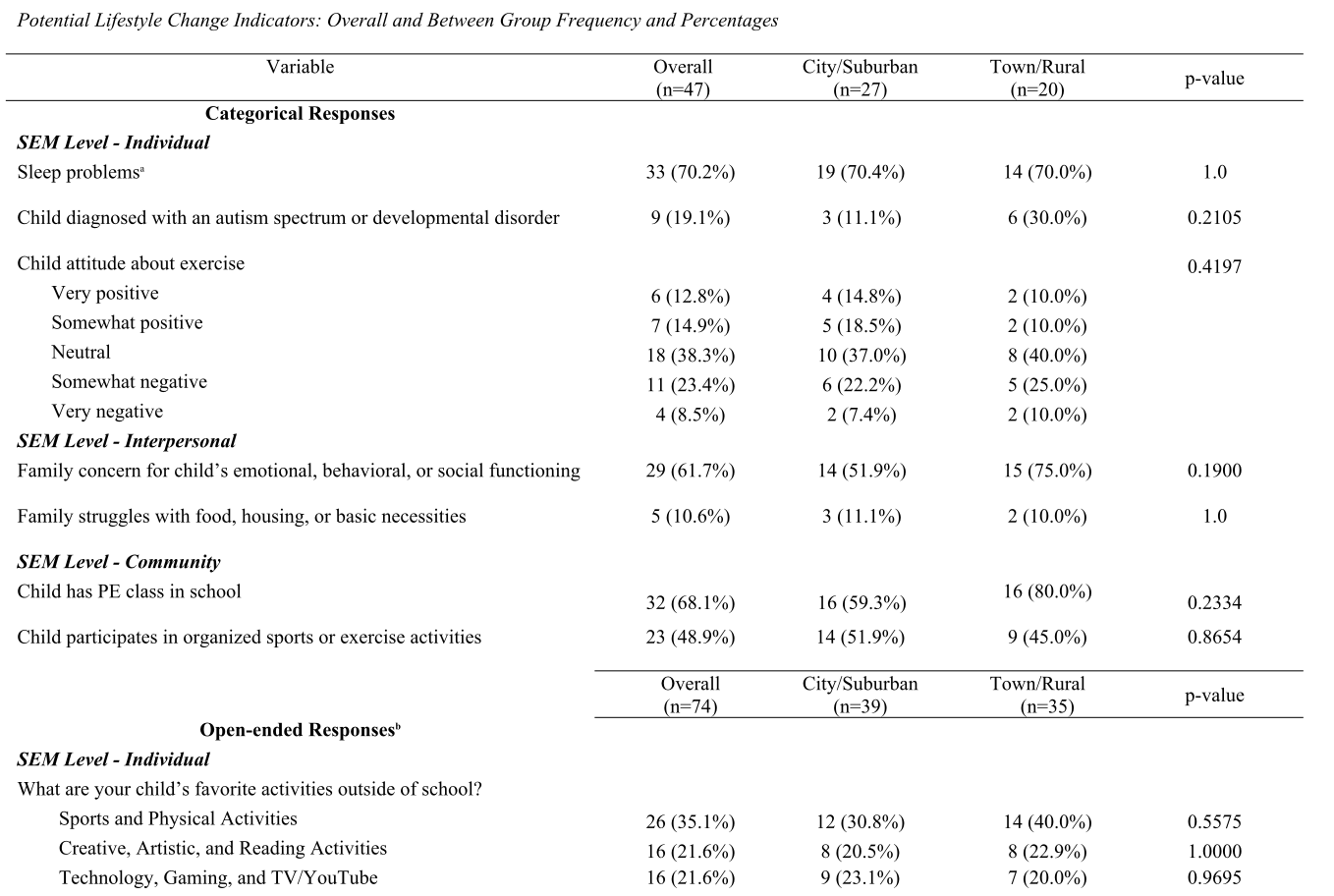
We evaluated 47 cases total: 27 representing cities or suburbs ("urban"), and 20 representing towns or rural areas ("rural"). The two groups under comparison were largely similar in terms of baseline demographics, except that the urban group had a significantly higher proportion of hypertension diagnoses among their families (See Table 1). For individual-level lifestyle change indicators measured quantitatively, a large portion of children overall had sleep problems (n = 33, 70.2%), and about one-fifth of children had autism spectrum disorder. About 38% of children had a neutral attitude towards exercise, whereas 32% had a negative, or somewhat negative, attitude about exercise. For interpersonal factors, families were concerned about the child's emotional, behavioral or social functioning (61.7%). About 10% of all responses indicated that the family struggled with food, housing, or basic necessities. For community-level factors, the majority of children (68%) had a physical education class in school and nearly half (48.9%) participated in organized sports or exercise activities. No statistically significant group differences were found (see Table 1).

Table 1

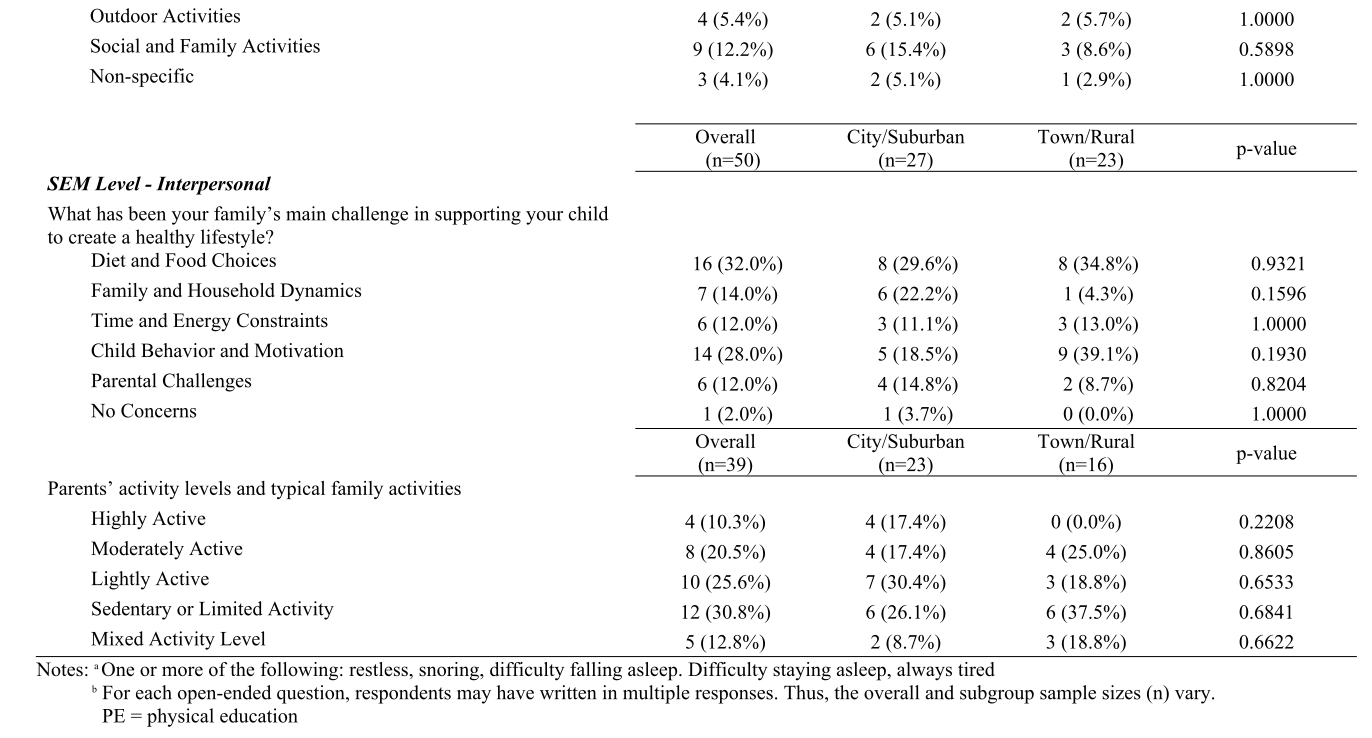
An open-ended, individual-level question was asked about the child's favorite activity outside of school. Overall, 35.1% favored sports and physical activities. For open-ended, interpersonal questions, respondents indicated that the main challenges in supporting their child to create a healthy lifestyle included issues with diet and food choices (32%), and child behavior and motivation (28%). About a third of respondents also reported sedentary or limited parental activity levels; only about 10% indicated "highly active." No statistically significant differences were found between urban and rural groups (see Table 2).

Discussion

We evaluated multi-level factors based on the SEM that may influence lifestyle change among children with obesity and who attend schools in places designated as MUA/P and HPSA. Key findings show that most children presented with sleep problems. Sleep disturbances are associated with childhood obesity, although the causal mechanism is not clearly understood (Centers for Disease Control and Prevention, 2024b). A recent systematic and meta-analysis of sleep interventions to treat childhood obesity showed mixed results (Liu et at., 2024). These results indicate more research that isolates sleep as an intervention is necessary. Nevertheless, nurses can play a role in childhood obesity management by educating children and caregivers on sleep hygiene and screening for serious sleep concerns, such as sleep apnea.

Approximately 20% of children were diagnosed with a developmental disorder or autism. Children with autism have an elevated risk for obesity (Sammels et al., 2022). However, a 2022 systematic review found no studies reporting the prevalence of autism among children living with obesity, which signals an urgent need to screen children with obesity for developmental disorders (Sammels et al., 2022). Nursing can support children with obesity and ASD or other developmental disorders by creating developmentally appropriate, tailored intervention plans that account for the child's unique strengths and challenges.

A little over a third of children reportedly had a "somewhat negative" or "negative" attitudes towards exercise, but 35.1% of respondents indicated that sports and physical activities was a favorite endeavor for the child outside of school. When engaging in conversations about childhood obesity, researchers suggest being clear about the framing of physical activity as time to "run and play" rather than "organized exercise" (L'Hôte et al., 2021). Although we did not examine children's attitudes about exercise and their favorite out-of-school activities for congruence on a case-by-case basis, it is possible that children and families have divergent understanding of what constitutes healthy physical activity. Nurses are encouraged to use clear, developmentally appropriate language when engaging with children and families in lifestyle change programs.

Regarding interpersonal-level factors, diet and food choices and child motivation were listed as primary challenges to creating a healthy lifestyle. More than half (61.7%) of responses showed there was family concern for the child's emotional, behavioral, or social functioning. Kelleher and colleagues (2017) found that parents desired a holistic weight management approach, including motivational aspects, versus focusing on diet alone. Despite responses showing that children typically favored sports and exercise activities, we found that 30.8% indicated the family had a sedentary lifestyle, which is known to positively correlate with sedentary behavior in children with obesity (Lundh et al., 2025). Further, nearly 90% of the overall sample showed a family history of overweight. Although the evidence about effectiveness of parental involvement in nurse-led childhood obesity interventions is mixed. Closely monitoring parental activities is important for understanding how it influences childhood obesity interventions (Whitehead et al., 2021).

As for community level factors, 68.1% of children had a physical education class in school, and nearly half the responses demonstrated the children participated in organized sports or exercise activities. In Idaho, physical education classes are required for grades 1-8 (no specified minimum time), while in high school physical education must be offered, but students are not required to take the class (Idaho Administrative Code: Rules Governing Thoroughness, n.d.; SHAPE America, 2016). School-based physical activity programs for children and adolescents may have positive and sustained effects on increasing physical activity during school hours, especially when programs are delivered by trained experts and when parents are involved (Moeller et al., 2024). Nurses are well-positioned to advocate for legislation that promotes optimal school-based physical activity, and to encourage parent involvement in their child's school-based physical activity programs.

We found no differences in any of the individual, interpersonal, or community-level factors between children attending urban and rural schools. Rural communities in Idaho tend to have higher poverty rates, lower per capita income, and higher uninsured rates than urban ones (Idaho Department of Health and Welfare, n.d.). However, our results showed no difference between those in rural or urban areas in response to a question about family struggles with food, housing, or basic necessities. Our results add to inconsistent evidence about the association between socioeconomic status and rurality (Willimas et al., 2018). Although socioeconomic status is thought to contribute to childhood obesity, the difficulty in defining and measuring it may contribute to inconsistent findings (Williams et al., 2018). The small overall and subgroup samples in our study that did report socioeconomic-related family struggles precludes any definitive conclusions. Future research should incorporate a cohesive measure of socioeconomic status that is sensitive to underlying urban and rural differences

Limitations

The small sample size and the scope of the intake questions limit the generalizability of results. The intake form from which measures were extracted was not a formally developed or validated instrument intended for research, so the interpretation of whether a specific factor was a potential indicator for lifestyle change remains subjective. However, the questions were recommended by clinicians who are subject matter experts in treating childhood obesity. The intake forms also lacked residential addresses, so urban or rural categorization for each case was based on school locale designation, which may vary from actual residence. Cross-study comparison is limited due to varying operational definitions of the rural-urban continuum. Future research should include prospective and longitudinal approaches with formally validated instruments that explore more specific potential lifestyle change indicators in larger samples.

Conclusion

Childhood obesity is a serious and complex public health concern. Lifestyle medicine programs aim to holistically support children and families in addressing childhood obesity. To tailor programs to children and families, health professionals should understand how multi-level factors influence or impact health.

Acknowledgement:

The authors thank Sierra Contreras and Dr. Julie Swanson for their contributions to this work.

Author Contributions

Anna C. Quon: Conceptualization, Methodology, Validation, Formal Analysis, Data Curation, Writing -- Original draft, Visualization, Supervision, and Project administration; Christine Patterson: Software, Validation, Formal Analysis, Data Curation, Writing -- Original Draft, Visualization; April LeBlanc: Conceptualization, Methodology, Investigation, Data Curation, Writing -- Review and Editing, Project administration; Laura J. Tivis: Conceptualization, Methodology, Writing- Review and Editing, and Supervision.

Statements and Declarations

Ethical Considerations

This study was reviewed and approved by the Institutional Review Board and designated as IRB exempt. Consent to participate was not applicable.

Declaration of Conflicting Interest

The author(s) declared no potential conflicts of interest with respect to the research, authorship, and/or publication of this article.

Funding Statement

This research received no specific grant from any funding agency in the public, commercial, or not-for-profit sectors.

Article references 

Bronfenbrenner, U. (1979). The ecology of human development: Experiments by nature and design. Harvard university press.

Centers for Disease Control and Prevention. (2024a, December 20). Childhood Obesity Facts. Obesity. https://www.cdc.gov/obesity/childhood-obesity-facts/childhood-obesity-facts.html

Centers for Disease Control and Prevention. (2024b, December 20). Preventing Childhood Obesity: 6 Things Families Can Do. Obesity. https://www.cdc.gov/obesity/family-action/index.html

Crouch, E., Abshire, D. A., Wirth, M. D., Hung, P., & Benavidez, G. A. (2023). Rural-urban differences in overweight and obesity, physical activity, and food security among children and adolescents. Preventing Chronic Disease, 20, E92. https://doi.org/10.5888/pcd20.230136

Fulkerson, J. A., Horning, M. L., Barr-Anderson, D. J., Linde, J. A., Sidebottom, A. C., Lindberg, R., Friend, S., Flattum, C., & Freese, R. L. (2021). Universal childhood obesity prevention in a rural community: Study design, methods and baseline participant characteristics of the NU-HOME randomized controlled trial. Contemporary Clinical Trials, 100, 106160. https://doi.org/10.1016/j.cct.2020.106160

Healthy People 2030. (n.d.). Social Determinants of Health. Health.Gov. Retrieved July 23, 2024, from https://health.gov/healthypeople/priority-areas/social-determinants-health#:~:text=Social%20determinants%20of%20health%20(SDOH,Economic%20Stability

Idaho Administrative Code: Rules Governing Thoroughness, No. IDAPA 08.02.03. https://adminrules.idaho.gov/rules/current/08/080203.pdf

Idaho Department of Health and Welfare. (n.d.). Rural Health and Underserved Areas. Retrieved February 14, 2025, from https://healthandwelfare.idaho.gov/providers/rural-health-and-underserved-areas/rural-health-and-underserved-areas

Kelleher, E., Davoren, M. P., Harrington, J. M., Shiely, F., Perry, I. J., & McHugh, S. M. (2017). Barriers and facilitators to initial and continued attendance at community-based lifestyle programmes among families of overweight and obese children: A systematic review. Obesity Reviews: An Official Journal of the International Association for the Study of Obesity, 18(2), 183--194. https://doi.org/10.1111/obr.12478

L'Hôte, E., Levay, K., & Nicky, H. (2021). Changing the childhood obesity conversation to improve children's health. Washington DC: FrameWorks Institute. https://frameworksuk.org/resources/changing-the-childhood-obesity-conversation-to-improve-childrens-health/

Lim, C. S., & Janicke, D. M. (2013). Barriers related to delivering pediatric weight management interventions to children and families from rural communities. Children's Health Care, 42(3), 214--230. https://doi.org/10.1080/02739615.2013.816596

Liu, R., Figueroa, R., Brink, H. V., Vorland, C. J., Auckburally, S., Johnson, L., Garay, J., Brown, T., Simon, S., & Ells, L. (2024). The efficacy of sleep lifestyle interventions for the management of overweight or obesity in children: a systematic review and meta-analysis. BMC Public Health, 24(1), 321. https://doi.org/10.1186/s12889-024-17708-6

Lundh, H., Arvidsson, D., Greven, C., Fridolfsson, J., Börjesson, M., Boman, C., Lauruschkus, K., Lundqvist, S., Melin, K., & Bernhardsson, S. (2025). Physical activity and sedentary behaviour amongst children with obesity---Exploring cross-sectional associations between child and parent. Journal of Activity, Sedentary and Sleep Behaviors, 4(1), 2. https://doi.org/10.1186/s44167-025-00072-0

Moeller, N. C., Oestergaard, L., Rasmussen, M. G. B., Schmidt-Persson, J., Larsen, K. T., & Juhl, C. B. (2024). How to get children moving? The effectiveness of school-based interventions promoting physical activity in children and adolescents - A systematic review and meta-analysis of randomized controlled- and controlled studies. Health & Place, 89, 103333. https://doi.org/10.1016/j.healthplace.2024.103333

Ogden, C. L., Fryar, C. D., Hales, C. M., Carroll, M. D., Aoki, Y., & Freedman, D. S. (2018). Differences in obesity prevalence by demographics and urbanization in US children and adolescents, 2013-2016. JAMA, 319(23), 2410--2418. https://doi.org/10.1001/jama.2018.5158

Ohri-Vachaspati, P., DeLia, D., DeWeese, R. S., Crespo, N. C., Todd, M., & Yedidia, M. J. (2015). The relative contribution of layers of the Social Ecological Model to childhood obesity. Public Health Nutrition, 18(11), 2055--2066. doi:10.1017/S1368980014002365

Pereira, M. M. C. E., Padez, C. M. P., & Nogueira, H. G. D. S. M. (2019). Describing studies on childhood obesity determinants by Socio-Ecological Model level: A scoping review to identify gaps and provide guidance for future research. International Journal of Obesity (2005), 43(10), 1883--1890. https://doi.org/10.1038/s41366-019-0411-3

Potter, W. J., & Levine‐Donnerstein, D. (1999). Rethinking validity and reliability in content analysis. Journal of Applied Communication Research, 27(3), 258--284. https://doi.org/10.1080/00909889909365539

Sammels, O., Karjalainen, L., Dahlgren, J., & Wentz, E. (2022). Autism Spectrum Disorder and Obesity in Children: A Systematic Review and Meta-Analysis. Obesity Facts, 15(3), 305--320. https://doi.org/10.1159/000523943

Strochlic, R., Au, L., & Ritchie, L. (2017). Is urban--rural location associated with weight status in school children? An examination of 42 small and rural Californian counties. Rural and Remote Health, 17(2). https://doi.org/10.22605/RRH3966

U.S. Department of Education. (n.d.). Common Core of Data (CCD). National Center for Education Statistics. Retrieved January 30, 2025, from https://nces.ed.gov/ccd/

U.S. Health Resources and Services Administration. (n.d.). What Is Shortage Designation? Bureau of Health Workforce. Retrieved January 30, 2025, from https://bhw.hrsa.gov/workforce-shortage-areas/shortage-designation#mups

Williams, A. S., Ge, B., Petroski, G., Kruse, R. L., McElroy, J. A., & Koopman, R. J. (2018). Socioeconomic Status and Other Factors Associated with Childhood Obesity. Journal of the American Board of Family Medicine : JABFM, 31(4), 514--521. https://doi.org/10.3122/jabfm.2018.04.170261

Save the Date
In Memorium

Obituaries will return in the next edition of RN Idaho.

Advertise in This Newsletter

Nursing associations are among the most trusted partners in healthcare. Align your brand with our association to support us, deliver your message alongside editorial level content, build brand awareness, & reach our highly engaged / established audience. 

For sponsorship rates and information within this official state nursing association publication, please contact Nursing Network at advertising@nursingnetwork.com 

We appreciate your support!

Get in touch
Terms and Conditions Cookie Policy Privacy Policy Contact Us